
Rigid preschool structures, drop-off logistics, and one-size-fits-all curricula are pushing more families toward homeschooling. Homeschooling household rates jumped from 5.4% to 11.1% between spring and fall 2020, a shift that opened the door for families to rethink early learning entirely (US Census Bureau).
But most articles stop at theory. Parents want to know what actually changes day-to-day — the schedule, the activities, the tradeoffs. This article covers the real benefits of homeschooling a 4-year-old, what a routine looks like, and what to avoid.
TL;DR
- Learning moves at your child's developmental pace, not a fixed curriculum timeline
- Core benefits: flexible scheduling, one-on-one attention, play-based learning, family bonding
- Structured time only needs to be 20-30 minutes a day
- Success comes from consistency and simple routines, not expensive materials
What Does Homeschooling a 4 Year Old Actually Look Like
At age 4, homeschooling is mostly guided play, shared reading, and everyday moments turned into learning opportunities.
A typical day mixes:
- 20-30 minutes of structured activity (letters, counting, fine motor work)
- Unstructured free play indoors or outside
- Outings such as grocery runs, walks, and library visits
- Life skills practice like setting the table or sorting laundry
This stage is kindergarten preparation, not formal academics. The focus is building curiosity and confidence rather than covering a syllabus.

Key Benefits of Homeschooling a 4 Year Old
These benefits focus on outcomes parents actually care about: development, engagement, connection, and cost.
Personalized Pace and Learning
Four-year-olds vary enormously in readiness. The CDC's milestone guide notes it describes what at least 75% of children can do by a certain age (a guide, not a deadline) (CDC). One child might read simple words while another still needs support holding a crayon. Homeschooling lets you meet each skill where it actually is.
Parents can:
- Slow down letter recognition if a child isn't ready
- Speed up counting practice if a child is bored with basics
- Adjust fine motor practice based on real-time observation
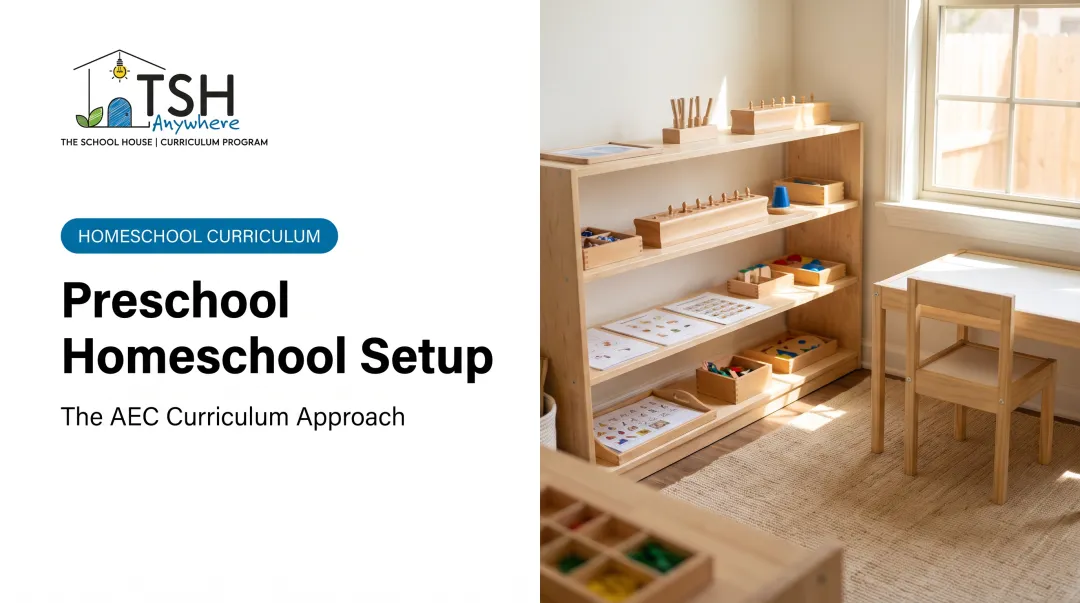
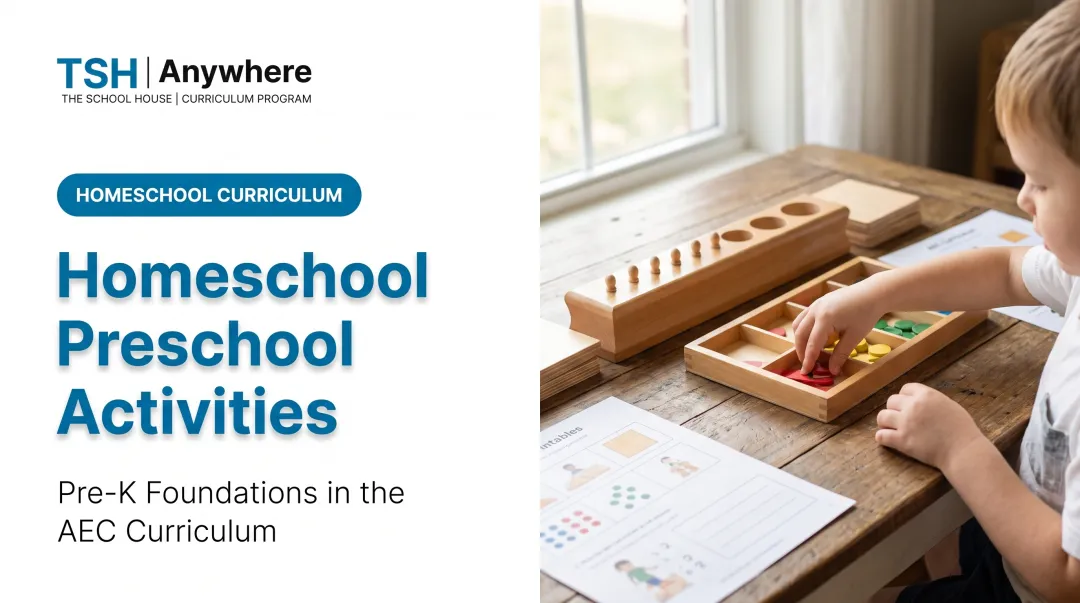
TSH Anywhere's Primary-level curriculum (covering Pre-K–K) organizes materials by learning level rather than a fixed pacing calendar. Literacy uses letter cards and interactive reading; counting uses manipulatives like Teen Beads; letter formation uses sensory work such as sand writing.
That flexibility helps most when a child is ahead, behind, or has learning differences a classroom can't easily accommodate.

Play-Based, Low-Pressure Learning Environment
Formal preschool programs increasingly push academic pressure downward. Homeschooling can keep play central instead.
NAEYC reports that guided play (where a child leads but an adult creates intentional learning moments) produces stronger vocabulary and spatial-skill outcomes than free play alone (NAEYC). Blocks turn into early geometry lessons, and a sensory bin doubles as vocabulary practice. Pretend play builds social-emotional skills at the same time.
TSH Anywhere's Primary curriculum reflects this blend: a Binomial Cube activity introduces early mathematical thinking through hands-on manipulation, while a flower-arranging session pairs creative expression with sensory learning. Neither looks like "school," but both teach.
It is especially useful for children who show school-related anxiety or need more movement to stay engaged.

Stronger Parent-Child Bond and Family Flexibility
Homeschooling folds learning into daily life rather than separating "school time" from "home time." Meals, errands, and outings all become teaching moments.
The American Academy of Pediatrics notes that developmentally appropriate play with parents supports social-emotional growth, language development, and self-regulation (AAP).
Stress relief varies by household, but the schedule flexibility removes common friction points:
- No scrambling during illness
- No rigid drop-off windows
- Easier travel with young kids
- Simpler logistics for families with multiple young children or non-traditional work schedules
Cost Savings and Accessibility
Homeschooling a 4-year-old typically costs far less than private preschool. Most resources (books, simple manipulatives, household items) are inexpensive or already at home.
For context, national child-care pricing averaged $13,184 annually in 2025 (Child Care Aware of America). That figure covers licensed centers broadly, not preschool tuition specifically, but it signals the financial pressure many families face.
TSH Anywhere's curriculum subscription runs $125/month or $1,200/year per learner. That includes the full American Emergent Curriculum in 8-week sessions, 400+ training films, printables, and live educator support. Physical materials boxes are optional add-ons.
For working families, that price point can turn preschool-level learning from a major line-item expense into a manageable monthly cost.

What Homeschool Preschool Should NOT Look Like
A few common mistakes undercut the benefits above:
- Over-scheduling structured time: Cramming in hours of "lessons" defeats the purpose
- Workbook-only learning: Ignores hands-on, sensory-based development
- Comparing to public school benchmarks: Creates unnecessary pressure at age 4
- Neglecting free play: Treats open-ended play as optional instead of essential development
The opposite extreme is just as risky. No routine at all leads to disorganized days and parent burnout. Aim for loose structure with room to breathe.
Building a Simple 4 Year Old Homeschool Routine
Anchor the day around fixed points like meals, naps, and quiet time, and fill the rest with a mix of learning, outings, and free play.
- Keep structured time under 30 minutes, ideally in the morning when focus is highest
- Pick one simple theme per week instead of juggling multiple subjects daily
- Leave room for outings: a grocery trip teaches counting and categorization better than a worksheet
- Build in transition time between activities to avoid rushing a 4-year-old
A good routine gives each day just enough shape to feel predictable, without turning it into a miniature school day.
Conclusion
The real value of homeschooling a 4-year-old comes down to three things: flexibility, personalized pace, and stronger family connection. In practice, that means shorter, calmer days and a child who learns at their own speed instead of someone else's.
Those daily gains add up. A confident, curious 4-year-old typically carries that momentum into kindergarten. Start simple, stay consistent, and adjust as you learn what actually works for your child.
Frequently Asked Questions
What is the best homeschool curriculum for a 4-year-old?
There's no single "best" option. Start with play-based, multisensory resources covering letters, numbers, and fine motor skills, then adjust based on your child's interests and pace.
How many hours a day should a 4-year-old homeschool?
Structured learning should stay brief: 20-30 minutes. The rest of the day fills naturally with play, outings, and everyday learning moments.
Do I need to follow my state's preschool standards when homeschooling a 4-year-old?
Formal standards typically aren't required at this age. Compulsory schooling laws generally trigger around age 6, though it's worth checking your state's rules through HSLDA as your child approaches kindergarten.
Can homeschooling a 4-year-old properly prepare them for kindergarten?
Yes, when it covers foundational literacy, numeracy, and social-emotional skills through consistent, engaging activities rather than passive screen time or drills.
What if my 4-year-old resists structured learning activities?
Shorten the session, add more movement or play, and follow their interests instead of forcing compliance. Resistance usually means the activity needs adjusting, not the child.
Is homeschooling a 4-year-old more affordable than sending them to preschool?
Generally, yes. Homeschooling relies on low-cost materials and household items, while private preschool tuition often runs into thousands of dollars annually.