Introduction
Figuring out "what preschool is supposed to look like" at home can feel impossible. There's no textbook that tells you exactly what to do on a Tuesday morning with a three-year-old who wants to dump the entire bin of dried beans on the floor.
Many parents worry they don't know what to teach, fear their child is falling behind, or struggle to stay consistent past the first few weeks. Here's the good news: preschool doesn't need worksheets or a strict schedule to work.
This guide covers hands-on activity ideas across six key skill areas, a simple daily rhythm to organize them, and practical tips to stay consistent without burning out.
Key Takeaways
- Short, playful, hands-on activities beat formal worksheets for this age group
- Rotating through six skill areas weekly builds a well-rounded foundation
- A loose daily rhythm reduces stress more than a rigid, time-based schedule
- Visual routines and batched supplies are the real keys to long-term consistency
Why Hands-On Activities Matter in Homeschool Preschool
Preschoolers learn through their hands, not through sitting still and listening. The National Association for the Education of Young Children identifies play as central to language development, self-regulation, social skills, and problem-solving from birth through age eight.
In a study cited by the American Academy of Pediatrics, 3- to 4-year-olds who got just 15 minutes of free play showed twice the drop in anxiety of kids who spent that same time listening to a teacher read a story. Movement, touch, and exploration reach preschoolers in ways passive listening does not.
Hands-on activities also follow your child's natural curiosity. When a preschooler wants to spend 20 minutes lining up buttons by color instead of moving to the next planned activity, that focused sorting is learning in real time.
This approach offers a few practical wins for homeschool families:
- Reduces the frustration and burnout many parents report after starting with overly formal, workbook-heavy programs
- Builds a stronger parent-child bond through shared, unstructured time
- Gives working families the scheduling flexibility that a traditional preschool classroom simply can't offer
6 Key Skill Areas for Homeschool Preschool Activities
A well-rounded preschool week touches six core areas. No single day needs to cover all of them. Rotation across the week is what actually matters, not daily perfection.
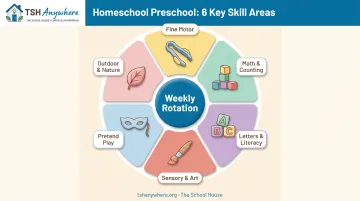
Fine Motor Skills Activities
These build the hand strength and control kids need for everything from holding a crayon to buttoning a coat. Low-prep ideas include:
- Tweezer or pom-pom transfers between bowls
- Lacing beads onto string or pipe cleaners
- Playdough mats with shape cutters
- Tracing shapes or letters in a salt or sand tray
Many homeschool parents place fine motor work first in the day, since it's a quiet, focused task that eases kids into "school mode" before bigger activities start.
Math & Counting Activities
Keep math light, hands-on, and pressure-free. Good options include:
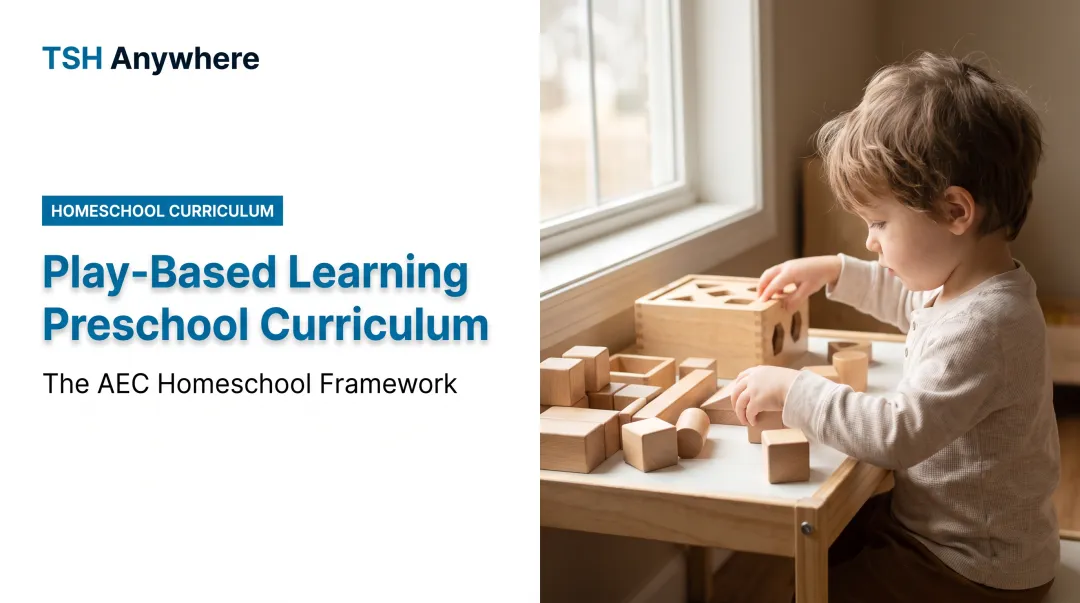
- Counting manipulatives like buttons, blocks, or small toys
- Color and shape sorting games
- Simple pattern-building with blocks (red, blue, red, blue)
- Number-matching games using cards or dot cards
NCTM and NAEYC recommend giving young children plenty of time and materials to explore math concepts on their own terms, rather than pushing formal instruction too early. Manipulative-based play builds number confidence naturally, without relying on worksheets.
Letters & Early Literacy Activities
At this age, prioritize building an ear for sounds and comfort with print over formal reading. Try:
- Letter puzzles and matching games
- Alphabet sensory bins (hide letter tiles in rice or beans)
- Rhyming games and silly word play
- A "letter of the week" theme with hands-on exposure
Phonological awareness (hearing and playing with sounds) and print awareness (understanding how books and text work) are the real building blocks here, according to Reading Rockets. Formal decoding comes later.
Sensory & Art Activities
Sensory bins and open-ended art give kids space to explore textures, colors, and cause-and-effect. Ideas include:
- Sensory bins filled with rice, dried beans, or water beads
- Process art (painting for the experience, not a finished product)
- Theme-tied painting projects, like leaf prints in fall
- Simple seasonal crafts using paper, glue, and scissors
Combining touch with sight, sound, and sometimes smell supports cognitive learning and gives kids multiple ways to process the same concept, according to Michigan State University Extension research.
Pretend Play & Dramatic Activities
Pretend play looks like "just playing," but it's doing real developmental work. Options include:
- Pretend grocery store with play food and a toy register
- Doctor role-play with stuffed animal patients
- Puppet shows using socks or paper bag puppets
- Dress-up tea parties with siblings or stuffed animals
Research links pretend play to stronger social competence and oral language skills in preschoolers. The language your child uses while "running" a pretend store is often more advanced than everyday conversation.
Outdoor & Nature Activities
Outdoor time supports both gross motor development and attention span. The American Academy of Pediatrics links more outdoor time with improved motor development in young kids. Try:
- Nature scavenger hunts (find something red, something round, something soft)
- Mud kitchens or outdoor sensory bins
- Simple gardening tasks like watering or digging
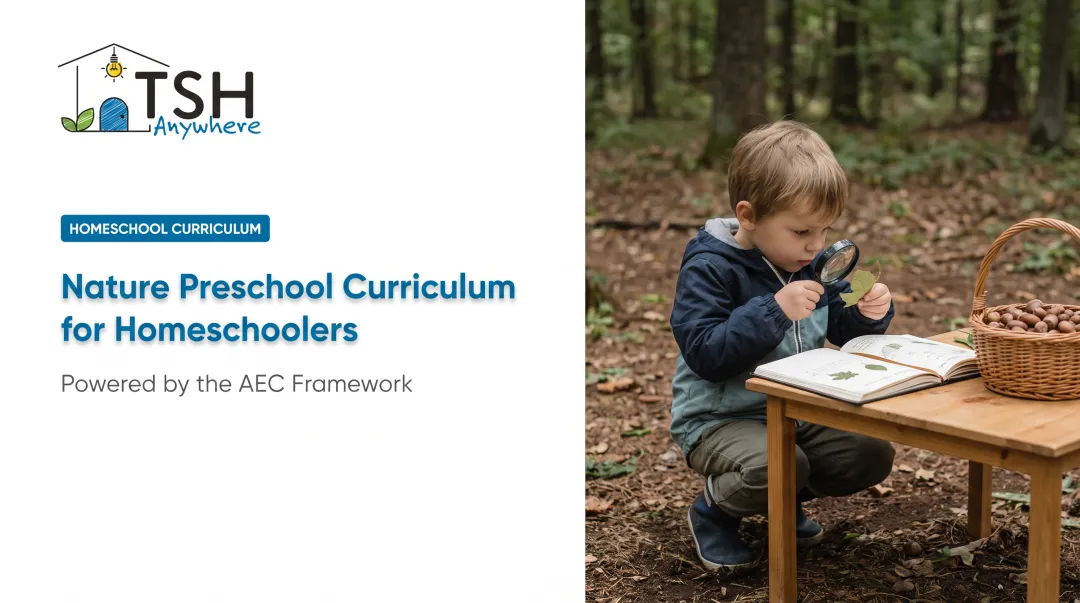
- Nature walks with a magnifying glass for close-up exploring
Building a Simple Daily Rhythm Around These Activities
A rhythm isn't a rigid schedule. It's a repeatable sequence that helps your child know what's coming next—predictability that supports self-regulation.
A 2024 review in the Journal of Family Theory & Review found that 16 of 18 studies linked predictable routines to stronger self-regulatory and executive-function skills in young children.
Here's a simple sequence to try:
- Open with a short circle time. Weather, calendar, one song. Keep it under 10 minutes so it signals "school time" without demanding long attention.
- Do fine motor and math activities first. Focus tends to be freshest early on, so these structured tasks fit well here.
- Add a read-aloud and snack break. This doubles as a natural transition and a bonding moment between more structured segments.
- Move into art or pretend play. These lower-pressure activities work well once initial focus starts to fade.
- Close with outdoor or free play. Let the day wind down naturally into rest time.
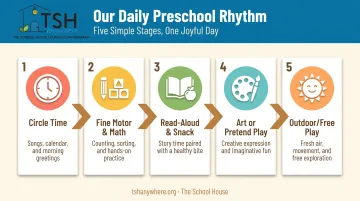
A visual routine chart with simple pictures helps kids see what's next on their own, cutting down on constant verbal reminders from you.
Tips to Stay Consistent Without Burning Out
Consistency is what makes homeschool preschool work long-term. A few simple planning habits keep the load light:
- Plan around one weekly theme. Pick a single book or topic and build the week's activities around it. This cuts daily decision-making down to almost nothing.
- Batch supplies into a grab-and-go caddy. Pre-fill bins with that week's materials so each morning requires zero setup scrambling.
- Use loop scheduling instead of a daily checklist. Rotate through activity types across the week rather than trying to hit every skill area every single day.
Each habit cuts the daily decision fatigue that wears parents down over time, especially in the early months of homeschooling.
Considering What Comes After Homeschool Preschool
As kids approach kindergarten age, many homeschool families start looking at what comes next. Co-ops, microschools, and other structured community settings can build on what you've already established at home.
The School House is one model built for that transition. Founded in 2017 by Mimosa Jones Tunney, it uses the American Emergent Curriculum (AEC), a Montessori-based framework shaped by a decade of research. More than six years of live classroom testing at the East Northport, New York flagship back the approach.
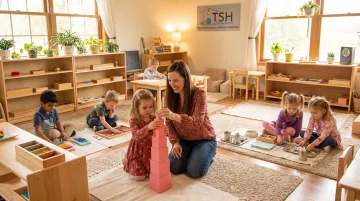
Families comparing next steps often weigh a few practical points:
- Communities can build the model—public or private—for roughly a third of typical school costs
- Flagship learners have tested at least twice above the national average across subjects
- Curriculum runs Pre-K through 8th grade, so preschool feeds a continuous path
That longer arc works at home or in a community setting. The same AEC framework is available to families who keep teaching at home, while community-built schools offer a middle path between full independence and high-cost private enrollment.
Frequently Asked Questions
What age should I start homeschool preschool activities?
Most families begin gentle, hands-on activities between ages 2.5 and 4. Follow your child's readiness and interest rather than a fixed age on a calendar.
How long should homeschool preschool activities last each day?
Aim for 30 to 90 minutes of active learning time, broken into several short, varied segments rather than one long block.
Do I need to follow a strict curriculum for homeschool preschool?
No. A formal curriculum is optional at this stage. Many families succeed using loose weekly themes paired with hands-on activities instead.
What supplies do I need for homeschool preschool activities?
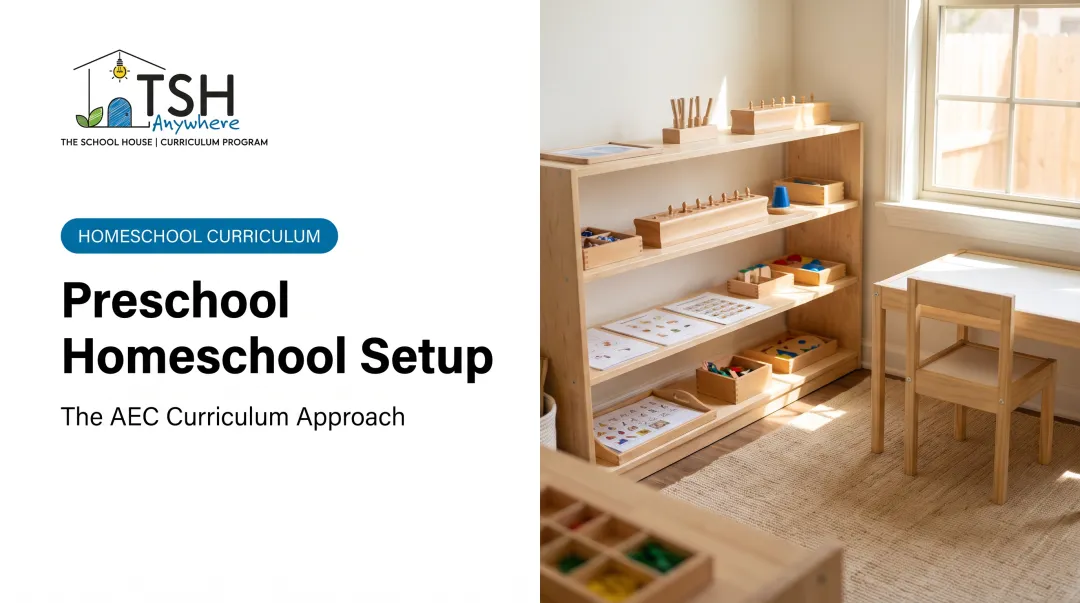
Basic, low-cost items cover most of it: counting manipulatives, playdough, craft basics like paper and glue, a stack of picture books, and a simple visual schedule.
How do I keep my preschooler engaged during homeschool activities?
Keep sessions short, follow their current interests, and rotate activity types often. Variety matters more than finding one ideal activity.
Can I homeschool preschool alongside older or younger siblings?
Yes. Simple loop schedules and independent tray activities let you work with multiple ages in one session without a separate lesson plan for each child.