Introduction
Excitement and nerves tend to show up together on the first day of homeschool. You've picked a curriculum, maybe stocked up on supplies, but nothing quite prepares you for the pressure of getting day one "right."
Many new homeschool parents feel they need to recreate a picture-perfect first day: matching outfits, a driveway sign, a fully mapped-out lesson plan. That pressure to perform often leads to burnout before the year even begins.
What makes a first day memorable usually isn't an elaborate setup. Kids tend to remember small traditions you repeat—the meaning behind them, not how big they were.
This guide covers simple, low-cost, age-adaptable ideas, from morning traditions to icebreakers to a "soft start" approach. The aim is a day one that feels special without wearing out the parent running it.
Key Takeaways
- Small, repeatable traditions (special breakfast, first-day photo) outlast expensive decor in memory.
- Soft-start mornings with light academics ease first-day pressure for parent and child.
- "All About Me" icebreakers build ownership and become keepsakes you revisit yearly.
- Age-match the fun: a mascot thrills a first grader, not a middle schooler.
Start the Celebration Before Breakfast: Night-Before & Morning Traditions
The countdown to day one doesn't have to start at breakfast. Some families build anticipation the night before with a small ritual: a dessert bar after dinner, a short talk about what everyone's excited to learn, or one wrapped school-supply gift left on the kitchen table.
None of this needs to be elaborate. A review of 32 studies published by the American Psychological Association found that family rituals (small symbolic practices repeated over time) are linked to stronger child adjustment and family identity. Size matters less than consistency.
Breakfast Traditions Kids Actually Remember
Pancakes, cinnamon rolls, or a quick breakfast out work just as well as anything fancier. Food-based traditions tend to be the ones kids recall most vividly years later, because taste and smell are powerful memory triggers.
Decor, Photos, and a Supply Surprise
You don't need to buy new decorations every August. Consider:
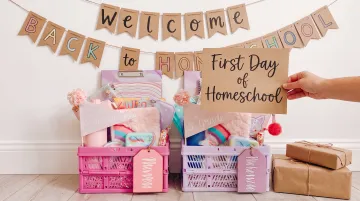
- Reused banners or balloons stored from last year, or thrifted finds
- A free printable sign listing name, grade, and one goal for the year, for photos
- Matching outfits (optional)
- A scavenger hunt or gift-wrapped reveal for new school supplies instead of just handing them over
That last one turns routine shopping into a small event kids look forward to.
Fun First-Day Icebreakers & Activities
Icebreakers give kids ownership over their homeschool experience from day one. Several also double as keepsakes worth pulling out years later.
Give Your Homeschool an Identity
A name, a mascot, or simple student ID cards builds belonging a workbook can't. Kids take these small rituals seriously.
Try one or more of these:
- Name the homeschool together and vote on a mascot
- Make simple student ID cards for each learner
- Design a door sign or "school crest" for the learning space
The "All About Me" project is an easy annual keepsake—worksheet or self-portrait covering favorites, goals, and current interests. Line this year's page up with last year's, and growth shows up in a way test scores rarely do.
One Hands-On "Wonder" Moment
Skip the full lesson on day one. Instead, try:
- A simple science experiment (baking soda volcano, sink-or-float test)
- A short nature walk with a magnifying glass or bug jar
- The "choose one thing" method, letting kids browse all their new curriculum and complete just one lesson they pick themselves
According to NAEYC's developmentally appropriate practice guidelines, active exploration and play support cognitive growth, social skills, and problem-solving—especially for younger learners. One genuine moment of curiosity beats a worksheet stack on day one.
End the day with a goal-setting activity: sticky notes where kids write what they want to learn this year, then keep them posted in the learning space through June.
Keep It Light: The Soft-Start Approach to Learning
A full academic load on day one sounds productive. In practice, it often backfires.
What a Soft Start Actually Looks Like
The soft-start philosophy is simple: keep day one light, then build. Concrete moves that work well:
- Tackle one core subject—or just a read-aloud—on day one
- Hold science and history until week two or three
- Use a visual daily-rhythm chart instead of an hour-by-hour timetable
- Close with a quick check-in: "What was your favorite part today?"
Kids can see what's coming next without feeling boxed into a rigid schedule, which makes the transition into a real routine much smoother.
Why Easing In Pays Off Later
A 2007 study published in Teaching of Psychology found that students given a positive first-class experience showed higher motivation for most of the course and better final grades than peers given a negative first impression.
The study used college students, not homeschoolers, but the takeaway still holds: first impressions of a new routine shape engagement well beyond day one.
That same low-pressure idea sits at the center of The School House's American Emergent Curriculum. Lessons are developmentally aligned rather than locked to a fixed calendar.
Educators adapt to the child in front of them instead of forcing one method on everyone. Pair that flexibility with the end-of-day reflection above—it's a small habit that links learning with feeling good long after week one.
Age-Specific First Day Ideas
What thrills a six-year-old will bore a sixteen-year-old. Here's how to adjust.
Elementary (Grades K–3)
Young kids need routine and fun on day one. Try:
- Naming the "school" and making ID cards
- Hosting a favorite-food lunch party
- Ending with music, movement, or a read-aloud before nap time or free play
Curricula built for this age band, like The School House's Elementary 1 program for grades 1–3, lean on sensory, hands-on engagement from the first lesson.
Middle School (Grades 4–8)
This age group is exploring independence and identity. Real input lands better than any surprise:
- A small school-themed gift
- A first-day field trip or nature walk
- A "team meeting" where kids weigh in on subjects and goals for the year
High School (Grades 9–12)
Talk through scheduling around your teen's natural productivity hours rather than forcing an early-morning start. The American Academy of Pediatrics notes that puberty shifts sleep timing later, and teens who start later report less daytime sleepiness and better academic engagement.
Round out the day with a casual "launch party" alongside other homeschool families, or a tech show-and-tell tied to their coursework.
Take the Celebration Outdoors
Homeschooling offers flexibility traditional schools can't—so use it. Pack up school materials for a backyard or park picnic instead of sitting at the kitchen table all morning.
Or turn day one into a field trip to a museum, nature center, or zoo. Older kids can journal what they notice for a keepsake notebook page.
A 2019 review in Frontiers in Psychology found nature exposure can boost attention, lower stress, and raise interest during lessons. Pair an outdoor outing with:
- A quick nature scavenger hunt
- A simple counting or sketching activity
- A short discussion about what they noticed
No formal lesson plan required.
Frequently Asked Questions
What should I do on the first day of homeschooling?
Keep it light: a special breakfast or photo tradition, one icebreaker activity, and just one subject or lesson rather than a full course load. Save the rest for week two.
What is the hardest age to homeschool?
Many parents find the middle school years toughest, thanks to shifting independence and interests. Flexibility and age-adapted activities ease this transition more than any single fix.
How do I make the first day of homeschool special without spending a lot?
Reused decorations, free printable signs, and a simple breakfast tradition go further than store-bought decor. The memory comes from the ritual, not the price tag.
Should I complete a full day of lessons on the first day?
No. A soft start with one subject or activity eases everyone into new routines far more effectively than a packed academic schedule on day one.
What age is the best time to start homeschooling?
There's no universal "best age." Many families begin at traditional kindergarten age, while others transition mid-year at any grade, depending on what fits their child.
How long should the first day of homeschooling last?
Plan for a shorter, lighter day than usual, often just a few hours including celebration activities, to ease the transition for both parent and child.