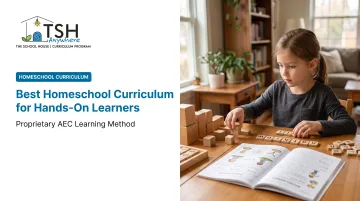
If that sounds familiar, you're not dealing with a discipline problem. You're likely raising a hands-on, or kinesthetic, learner, a kid who absorbs information through touch, movement, and doing rather than sitting still and reading.
The wrong curriculum format can turn a bright, curious child into a reluctant, frustrated one. The right hands-on fit does the opposite. It can transform daily lessons from a battle into something your child actually looks forward to.
This guide breaks down what makes a curriculum genuinely hands-on friendly, walks through top picks by subject, and gives you a framework for choosing with confidence.
Key Takeaways
- Kinesthetic learners retain concepts better through manipulatives and movement than passive worksheets alone
- The strongest hands-on curricula pair real materials with academic rigor, not just crafts
- Subject-specific programs often beat one-size-fits-all textbooks for tactile learners
- Match prep time and cost to your real bandwidth—not just how hands-on a program looks
Overview of Hands-On Learning in Homeschooling
Hands-on learning means absorbing information through touch, movement, and physical interaction rather than solely listening or reading. Most young children learn this way naturally, long before distinct learning preferences emerge.
Research on strict "learning styles" (visual, auditory, kinesthetic) is mixed. Psychologists haven't found strong evidence that matching instruction to a fixed learning "type" boosts achievement across the board. But that doesn't mean multisensory teaching is pointless.
What actually holds up in research:
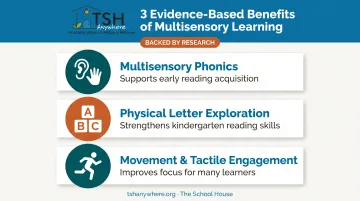
- Multisensory phonics (listening, speaking, reading, and touch) is a well-supported approach for early reading, per Reading Rockets
- Physical letter exploration during early reading training strengthens kindergarten reading acquisition
- Movement and tactile engagement help many kids stay focused longer, not only self-identified "kinesthetic" learners
You don't need to label your child a fixed "type" to know that letting them build, touch, and move through a lesson tends to work. The curricula below lean into that reality across core subjects.
Top Homeschool Curriculum Picks for Hands-On Learners
Every program on this list met the same bar:
- Real manipulatives built into daily lessons (not optional add-ons)
- Flexibility to match your child's pace
- Real academic rigor under the hands-on design
Math-U-See
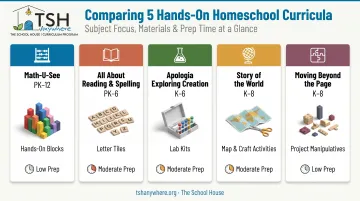
Math-U-See is a mastery-based math program spanning kindergarten through calculus, built around physical manipulative blocks and video-taught lessons. Kids physically build concepts like place value or fractions with blocks before they ever see abstract notation on the page.
That "build it before you write it" sequence is exactly what tactile learners need. A child who struggles to grasp what "carrying the one" means on paper often gets it instantly once they've physically moved blocks from one column to another.
| Feature | Details |
|---|---|
| Grade Levels/Format | K-12, video lessons plus manipulative-based workbooks |
| Hands-On Features | Integer blocks, decimal and fraction overlays for physical modeling |
| Prep Time | Minimal to moderate at early levels |
The program's Integer Block Kit is reused across every level, so it's one purchase that keeps paying off year after year.
All About Reading & All About Spelling
These sister programs from All About Learning Press cover pre-K through upper elementary reading and spelling, and they lean heavily on an Orton-Gillingham-style multisensory approach: kids see, say, and touch phonics concepts rather than relying on rote sight-word memorization.
Letter tiles do the heavy lifting. Kids build words on the table, slide sounds around, and work spelling patterns with their hands.
| Feature | Details |
|---|---|
| Grade Levels/Format | Pre-K through roughly 4th-7th grade, depending on level |
| Hands-On Features | Letter tiles, phonogram cards, interactive read-aloud activities |
| Prep Time | Little to none; open-and-go lessons |
One reusable Letter Tiles kit works across every level of both programs, which helps if you're outfitting more than one child.
Apologia Exploring Creation Series
Apologia's science curriculum runs from elementary through high school and reads more like a conversation than a textbook. The elementary modules pair notebooking journals (roughly 200-300 pages of student work) with real experiments, not just diagrams to color in.
For a science-curious kid who wants to do the experiment rather than read about someone else doing it, this format is a natural fit. The high school tracks keep that lab-based approach going, with hands-on experiments that require actually applying scientific concepts rather than just recalling them.
| Feature | Details |
|---|---|
| Grade Levels/Format | K-6 elementary modules; more rigorous high school tracks available |
| Hands-On Features | Real lab experiments, drawing and notebooking, cut-and-paste activities |
| Prep Time | Minimal to moderate, depending on lab complexity |
Story of the World with Activity Pack
Story of the World tells world history as a narrative, almost like reading a story to your kid at bedtime. Pair it with the Activity Book, and kids build history instead of only reading it.
Map work, crafts, and hands-on timeline projects turn abstract dates into physical, memorable experiences. A child who can't recall when the Roman Empire fell might still remember exactly how they built the aqueduct model.
| Feature | Details |
|---|---|
| Grade Levels/Format | Grades 1-8, four chronological volumes |
| Hands-On Features | Map activities, crafts, hands-on projects, and puzzles |
| Prep Time | Low for the core text; moderate with the full activity guide |
Moving Beyond the Page
Moving Beyond the Page is an all-in-one, project-based curriculum for ages 4-14 that blends literature, science, and social studies into thematic units. It's built with gifted and higher-ability hands-on learners in mind, though the strategies it uses tend to benefit most kinesthetic learners.
Manipulatives, experiments, and open-ended projects run through every unit, which means it asks more of the parent-teacher than an open-and-go program does.
| Feature | Details |
|---|---|
| Grade Levels/Format | Ages 4-14, thematic multi-subject units |
| Hands-On Features | Manipulatives, science experiments, hands-on math, puzzles |
| Prep Time | Moderate; more teacher involvement than open-and-go programs |
How to Choose the Right Curriculum for Your Hands-On Learner
The most common mistake? Picking a curriculum because it's popular in Facebook groups or looks good on Instagram, without actually checking how much physical interaction happens in daily lessons.
Here's what to check before you buy:
- Read a real sample lesson, not just the marketing page. Does the child touch, build, or move in the first ten minutes, or read for twenty minutes first?
- Match prep time to your actual bandwidth. Hands-on programs often need more setup, storage, and materials than textbook-only options. Be honest about how much daily prep you can realistically manage.
- Look for flexible assessment options. Projects, demonstrations, and models often show what a kinesthetic learner actually knows far better than a standardized test does.
- Check for rigor, not just crafts. Cutting and gluing isn't the same as learning. The best programs pair manipulatives with genuine academic depth.
- Budget for reusable materials. Blocks, letter tiles, and construction sets that work across subjects and siblings control long-term costs far better than single-use kits.
Budget matters in the long run, too. Homeschool families spend an average of $600 per student annually according to NHERI data. Hands-on programs can cost more upfront for manipulatives, but reusable kits shared across grades and siblings tend to even out over time.
Tips to Maximize Hands-On Learning at Home
You don't need a dedicated curriculum for every hands-on moment. A few practical adjustments go a long way:
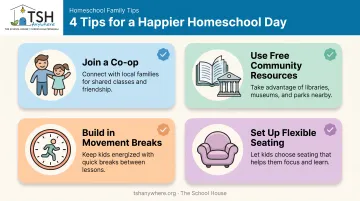
- Join or start a co-op. Splitting the cost of science kits, craft supplies, and manipulatives across a few families makes hands-on learning far more affordable.
- Use free community resources. Libraries, museum free days, and everyday household items can supplement your curriculum at little or no cost.
- Build in movement breaks. Short physical breaks between lessons can improve focus and knowledge retention, not just burn off energy.
- Set up flexible seating. Standing desks, floor cushions, or a wobble stool can keep a fidgety kid physically comfortable and mentally present during lessons.
Conclusion
The best homeschool curriculum for a hands-on learner is the one that matches their need for movement and touch, without watering down academic depth. There's no single "winner" here. It depends on your child, your budget, and how much prep time you have in a given week.
Request samples. Try a program for a few weeks. Reassess every year, because kids change, and what worked at age seven might feel too babyish or too rigid by age nine.
If solo homeschooling feels isolating, or you want structured community support with a hands-on curriculum, consider The School House's TSH Anywhere program. It's built on the American Emergent Curriculum, which treats manipulatives and hands-on work as a core instructional pillar—not an occasional activity.
That curriculum pairs with live educator gatherings and a parent community, so you're not figuring it out entirely on your own.
Frequently Asked Questions
What is the most successful homeschool curriculum?
"Success" depends heavily on the individual child, but mastery-based, multisensory programs with strong parent or community support tend to show the most consistent results across different learners.
What is the best hands-on science curriculum for homeschooling?
Look for programs built around real lab experiments, notebooking, and projects—not passive textbook reading. Apologia's Exploring Creation Series is one strong option for tactile learners.
What is the most rigorous homeschool curriculum?
Rigor comes from programs combining deep content with independent critical thinking, such as advanced project-based or mastery-based options, not simply from a heavier workload.
How do I know if my child is a hands-on (kinesthetic) learner?
Common signs include restlessness during lectures, a preference for building, drawing, or experimenting, and noticeably stronger performance on hands-on projects than on written tests.
Can hands-on learning curricula work for middle and high school students?
Yes. Older students can use lab-based science, model-building history projects, and applied STEM kits to keep hands-on engagement going through the teen years.
Do hands-on curricula cost more than traditional textbook programs?
Upfront costs can run higher because of manipulatives and kits, but reusable materials and free community resources like libraries and co-ops help offset ongoing expenses.