What Microschool Student-to-Teacher Ratios Look Like in the USA (2026)

In most U.S. classrooms, one teacher is expected to keep up with twenty-plus students moving at completely different speeds. Some keep up, some fall behind, and a few just stop getting noticed.
That is usually the point where parents and educators start looking at alternatives and come across one number again and again: the microschool student-to-teacher ratio.
It sounds simple on the surface, but this is not just a metric you skim past. It is often the difference between a child being managed and a child being actively taught.
If you are evaluating microschools or thinking about starting one, this guide will help you understand what those ratios actually look like in practice, where they start to break down, and how to tell if a microschool is set up to make that number work.
Key Takeaways
The microschool student-to-teacher ratio determines how attention, support, and pacing actually play out in a classroom.
The 6:1 to 10:1 range gives enough room for individual support without losing structure.
Small ratios break down quickly without a clear curriculum and systems to support daily learning.
Strong microschools scale by adding new groups, not by increasing class size.
When evaluating a microschool, focus on how the ratio works in practice, not the number alone.
What Is the Microschool Student-to-Teacher Ratio?
The student-to-teacher ratio measures the number of students per educator in a learning setting. A 6:1 ratio means six students per teacher. A 20:1 ratio means twenty.
In traditional schools, this figure is calculated across the entire institution and is often skewed low because it counts all adults on staff, including those who do not teach. In microschools, the ratio reflects the actual learning group, which gives you a far more accurate picture of what daily instruction looks like.
How Microschools Compare to Other US Settings
Sources: NEA Rankings and Estimates Report (nea.org) for public school data; National Microschooling Center 2025 Sector Analysis (microschoolingcenter.org) for microschool data. |
According to the National Microschooling Center's 2025 Sector Analysis, the median microschool enrollment grew from 16 students in 2024 to 22 students in 2025. Most of those schools still operate with one or two educators, keeping the student-to-teacher ratio well below that of traditional schools. Microschools now serve an estimated 750,000 students in the US, roughly 2 percent of the student population.
Typical Ratio Ranges by Microschool Type
• Home-based pods (1 parent-educator, 3–8 students): ratios as low as 3:1 to 5:1.
• Small community learning groups (6–12 students): ratios of 6:1 to 9:1.
• Structured microschools (12–22 students, 1–2 educators): ratios of 8:1 to 12:1.
• Microschool networks with teaching assistants: varies by design, typically below 12:1.
There is no single correct number. A ratio of 6:1 to 10:1 gives one educator enough room to run group work, pull individual students for focused support, and still maintain a clear daily structure. Much above 12:1 without an assistant, and the personalization advantage starts to erode.
Why the Microschool Student-to-Teacher Ratio Matters for Learning?

The case for smaller groups is not just instinct. Education research consistently links lower ratios to stronger academic outcomes, particularly in early childhood.
What the Tennessee STAR Study Found
One of the most widely cited long-term studies on class size, the Student-Teacher Achievement Ratio (STAR) study, ran from 1985 to 1989 across 79 Tennessee schools and approximately 7,000 students. While the data is decades old, it remains a foundational benchmark in education research and is still referenced when discussing the impact of class size.
Students in smaller classes of 13 to 17 outperformed peers in classes of 22 to 25 in both reading and math. The gains were especially significant for students from low-income households. Children who spent more time in smaller groups carried those academic advantages into later grades, even after returning to standard class sizes.
Microschools routinely operate at ratios below 10:1, well inside the range where these effects compound.
At that level, the difference is not subtle. Teachers can adjust pacing in real time, catch gaps before they widen, and spend actual one-on-one time instead of managing the room.
Suggested Read: Microschool Daily Schedule: Sample Template You Can Use Today
What Does a Low Student-to-Teacher Ratio Change Day to Day?
Statistics make the case in the abstract. Here is what the numbers actually look like inside a learning session.
Learning Gaps Get Caught Early
In a class of twenty-two students, a child who has been confused about place value for two weeks can stay invisible. In a group of six, you see it within a day or two. Early identification means early support, and small misunderstandings get addressed before they become large ones.
Instruction Adjusts in Real Time
A low ratio gives the educator enough bandwidth to notice mid-session when a concept is not landing. They can pause, reframe, or pull two students aside for a different explanation without losing the rest of the group. That kind of live adjustment is nearly impossible at 20:1.
Every Child Participates
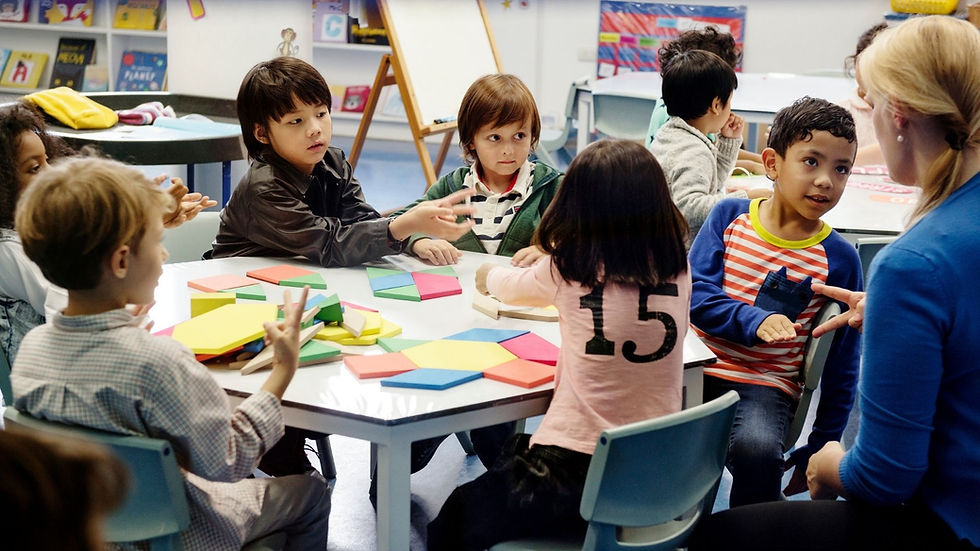
In a group of six to ten, no child can fade into the background. Every student gets called on. Every student's work gets seen. Children who typically go quiet in larger settings start asking questions because the risk of doing so in front of five peers is much lower than in front of twenty-four.
The Educator Teaches More, Manages Less
Behavior management, logistics, and transitions consume a measurable portion of instructional time in large classrooms. Reduce the group size so time can return to actual teaching, project guidance, and individual coaching.
State-Level Rules on Microschool Ratios in the US
There is no federal mandate on student-to-teacher ratios for microschools or private schools. Rules, where they exist, are set at the state level and depend largely on how a microschool is registered, either as a private school, under a homeschool statute, or under specific microschool legislation.
A handful of states have passed laws in the last two years that directly address microschool size and location. Most have not. The table below covers the states most relevant to anyone starting or joining a microschool in 2026.
State | What You Need To Know |
Florida | HB 1285 (2024) allows private schools to operate in churches, libraries, and community centers without local zoning approval. No state-set ratio cap. |
Texas | Pre-K child-to-staff requirement of 11:1 (TEA). No microschool-specific ratio law beyond that. |
New York | Substantial-equivalence standard for private schools. No set ratio cap, but curriculum and staffing scrutiny are high. |
California | Private school affidavit required. No statutory ratio max for microschools. City-level oversight varies. |
Georgia | The Learning Rights Protection Act codifies the rights of microschools. No specific ratio mandate. |
West Virginia | First state to define microschools by statute (SB 268, 2022). Local zoning still applies; no ratio cap set. |
If your state is not listed, check your state's department of education website for private school registration requirements. Some states also apply child-care licensing ratios when a learning group involves young children across multiple unrelated families, which can trigger a separate adult-to-child supervision standard. Confirming this before you set your enrollment cap prevents compliance problems later.
Thinking About Launching a Microschool? TSHA helps educators find the right space, set up their program, and launch with a ready-to-use curriculum built for small, personalized learning environments for Pre-K to 6th grade. |
How to Evaluate a Microschool's Student-to-Teacher Ratio

A ratio number on a website does not tell you much on its own. These are the questions worth asking and the signs worth watching for before you commit.
Questions to Ask Before You Enroll or Launch
• How many students are in the learning group at any one time?
• Is there one lead educator, or are there additional support staff?
• Does the ratio change by subject, activity, or age group within the school?
• What is the maximum group size the educator is comfortable managing?
• How is individual student progress tracked and communicated to parents?
What to Watch Out For
• Ratios that look low because non-teaching staff are included in the count.
• Large multi-age groups with no structured curriculum or learning progression.
• One educator managing more than 15 students with no teaching assistant.
• No system for documenting student progress or meeting state record-keeping requirements.
Suggested Read: Microschool Curriculum and Philosophies: A Guide for Educators
How The School House Anywhere (TSHA) Supports Small-Group Learning
The School House Anywhere (TSHA) is a program built for educators and parents who run microschools and learning pods for Pre-K to 6th grade. It is built around the American Emergent Curriculum (AEC), a hands-on, secular, and developmentally-aligned framework that connects subjects in real-world, meaningful ways rather than isolating them by workbook.

TSHA was designed specifically for the microschool format: one educator, a small group of students, and a curriculum that works without requiring hours of lesson planning each week.
Here is what the program includes.
Ready-to-use AEC curriculum: Secular, hands-on, and developmentally-aligned for Pre-K to 6th grade. No curriculum design background required.
Packaged 6-week sessions: Thematic learning modules that let you plan ahead and deliver consistent, structured instruction without starting from scratch each cycle.
Custom AEC printables and worksheets: Screen-free learning materials aligned to each session so every lesson is prepared in advance.
Transparent Classroom (progress tracking): Keep individual student records organized and meet state record-keeping requirements without the paperwork pile-up.
LIVE Educator and Founder Gatherings: Weekly online sessions to stay current, ask questions, and connect with other educators running similar programs across the US.
Live office hours and 24/7 support: Expert guidance available when you need it, not just during business hours.
Space and setup support: TSHA helps you identify and prepare a physical location, whether at home, in a church, or at a community facility.
Marketing and community-building resources: Tools to attract families, communicate progress, and grow your enrollment sustainably.
Suggested Read: Microschool Budgeting and Financial Planning Tips
Final Thoughts!
The microschool student-to-teacher ratio tells you how a classroom will run before you ever step inside it. It is not a surface-level number. It shows you how much attention each child will realistically get, how quickly gaps will be picked up, and whether learning can actually adjust in real time.
But the ratio is only one part of it. Without the right structure behind it, it does not hold up for long.
TSHA is designed around this exact setup: one educator, a small group, and a system that keeps things consistent without adding more to the educator’s plate.
If you are looking at a microschool or planning to start one, do not stop at the ratio. Look at how it is being used. Explore how to set up a microschool that actually works at a low student-to-teacher ratio.
Frequently Asked Questions
1. Does a lower student-to-teacher ratio make microschools more expensive?
Often, yes. Fewer students per educator means higher cost per child, but many families see it as paying for more individualized attention and support.
2. What is the ideal student-to-teacher ratio for different age groups in a microschool?
Younger children (Pre-K to early elementary) benefit from lower ratios like 4:1 to 8:1, while older students can function well in slightly larger groups like 8:1 to 12:1.
3. How do microschools maintain a low ratio as they grow?
Most expand by adding new small groups with additional educators rather than increasing class size, so the ratio stays consistent instead of scaling like traditional schools.
4. Can a microschool have a low ratio but still feel overcrowded?
Yes. If the physical space is too small or poorly organized, even a 6:1 ratio can feel cramped. Layout and environment matter as much as the number.
5. How does the student-to-teacher ratio impact social development in microschools?
Smaller groups often lead to stronger peer relationships and more participation, but schools may need to intentionally create opportunities for larger group interaction.
6. Is a low student-to-teacher ratio enough to ensure academic success?
No. The ratio creates the conditions, but outcomes still depend on curriculum quality, teaching approach, and how consistently student progress is tracked.


Comments