Microschool Daily Schedule: Sample Template You Can Use Today

Microschools now serve an estimated 750,000 students across the United States, according to a 2025 report from the National Microschooling Center. More educators and parents are launching them every year, drawn by the promise of personalized, flexible learning that a traditional classroom simply cannot offer.
But here is what most of them discover within the first few weeks: freedom without structure does not feel like freedom for long. You are juggling multiple age groups, trying to give every child focused attention, and somewhere between the morning rush and the afternoon slump, you find yourself asking whether real learning actually happened today.
The missing piece is almost always a well-designed microschool daily schedule, but one built around how children's brains actually work.
That is exactly what this guide is for. You will find the science behind productive daily scheduling, a complete sample schedule you can adapt right away, strategies for managing mixed-age classrooms without burning out, and practical tips for making the routine stick.
Key Takeaways
A microschool daily schedule should prioritize learning flow over strict time blocks, helping students move naturally between focused work, collaboration, and exploration.
Design the schedule around cognitive energy, placing demanding academic work earlier in the day and creative or enrichment activities later in the day.
Mixed-age microschools benefit from shared learning blocks, where students explore the same theme while working at different levels of complexity.
Testing and regularly refining the schedule is essential, since student engagement, group dynamics, and learning needs evolve throughout the year.
A clear structure makes microschools easier to manage and communicate, helping educators stay organized while families understand how the learning day unfolds.
Why a Daily Schedule Matters in a Microschool?

A microschool operates with fewer students, a smaller team, and more freedom than a traditional school. That is exactly what makes it powerful. But that freedom requires a dependable daily rhythm to hold it together.
It Reduces Decision Fatigue for educators.
When you know what comes next, you spend less mental energy managing transitions. You can focus on teaching rather than figuring out the logistics of the next hour.
It Gives Students a Sense of Security
Children thrive on predictability. Knowing what to expect each morning, what happens after lunch, and how the day ends reduces anxiety and helps students show up ready to engage.
It Supports Learning Continuity
A consistent daily structure means core subjects get protected time. Math does not get pushed out because a project ran long. Reading happens every day, not just when there is a gap in the schedule.
It Makes Progress Easier to Track
When learning follows a predictable flow, it is much easier to notice when a student is struggling, when a concept needs revisiting, or when a child is ready to move ahead.
With the right structure in place, a microschool day moves with purpose rather than constant adjustment.
What Makes a Good Microschool Daily Schedule?
Before jumping to a sample schedule, it helps to understand the principles that make one work. The schedule itself is just the container. These principles are what fill it with purpose.
A strong microschool daily schedule usually includes a few core elements.
Clear Anchor Routines: A consistent morning circle, core learning block, and closing reflection help establish a predictable rhythm for the day.
Longer Learning Blocks: Instead of frequent subject changes, longer blocks give students time to focus deeply on reading, math, projects, or collaborative work.
A Balance Of Academics And Exploration: Strong schedules combine core subjects with hands-on activities, projects, and outdoor learning.
Built-In Movement And Breaks: Younger learners especially benefit from regular movement breaks that help maintain attention and energy throughout the day.
Flexibility For Curiosity And Projects: A good schedule leaves room for extended exploration when students become deeply engaged in a topic.
Time For Reflection And Closure: Ending the day with journaling, discussion, or reflection helps students consolidate what they learned and prepares them for the next day.
When these elements are built into the schedule, the day feels structured without becoming rigid. Students experience a steady learning rhythm while still having space for creativity, collaboration, and discovery.
Building a microschool schedule from scratch can feel overwhelming. If you want a ready-to-use structure built around how children actually learn, The School House Anywhere (TSHA) provides a complete framework through the American Emergent Curriculum.
Steps to Build a Microschool Daily Schedule

Knowing the principles is one thing. Sitting down to actually build your schedule is another. Here is a practical sequence that takes you from a blank page to a daily routine your students can count on.
Step 1: Define Your School Day Length and Legal Requirements
Before planning learning blocks, confirm the length of your microschool day.
Review your state's homeschool or private school regulations for minimum instructional hours.
Determine whether your program runs a full-day or half-day model.
Use the required instructional time as the outer boundary for your schedule.
Typical ranges:
Full-day microschool: about 5.5 to 6.5 hours.
Half-day model: about 3 to 4 hours, common for younger learners.
Step 2: List All Learning Components for the Day
Start by identifying the types of learning experiences your students should have during the day.
Common elements include:
Morning community or circle time.
Literacy or language arts.
Mathematics.
Project-based learning.
Independent work or practice.
Collaborative activities.
Movement or outdoor time.
Enrichment activities such as art or music.
Closing reflection.
Next, separate them into:
Daily anchors: core activities that happen every day.
Rotational elements: activities that rotate across the week.
This distinction helps you protect essential learning time while keeping the schedule flexible.
Step 3: Schedule Core Academic Blocks Early

Place the most demanding learning activities early in the day when students are naturally more alert.
Focus the first part of the schedule on:
Literacy and reading instruction.
Mathematics practice and problem-solving.
Small group teaching or guided instruction.
Early placement improves attention, engagement, and retention for foundational subjects.
Step 4: Design Flexible Learning Blocks
Instead of dividing the day into short subject periods, organize the schedule into longer learning blocks.
Effective blocks usually:
Run 40 to 60 minutes.
Combine instruction, practice, and discussion.
Allow different age groups to work at appropriate levels.
Also include small transition buffers.
Add 5 to 10 minutes between blocks.
Use this time for materials setup, quick movement, or transitions.
These buffers help prevent one delayed activity from disrupting the entire schedule.
Step 5: Set Aside Time for Hands-On Projects
Project-based learning is often a core reason families choose microschools. Make sure the schedule protects this time.
When planning the project block:
Place it after core academic learning when students are already engaged.
Allow enough time for exploration and collaboration.
Connect projects to broader themes such as science, community, or storytelling.
A protected project block keeps the microschool experience creative and meaningful.
Step 6: Include Strategic Movement and Breaks
Students need regular physical movement to stay focused throughout the day.
Plan breaks intentionally:
Add short movement breaks after extended periods of learning.
Use outdoor play, stretching, or quick physical games.
Treat movement as part of the learning rhythm rather than an interruption.
These breaks help reset attention and maintain energy for the next learning block.
Step 7: Run the Schedule and Adjust Gradually
Your first schedule is a starting point, not a final version.
During the first few weeks:
Observe how long transitions actually take.
Note when students appear most engaged or distracted.
Identify blocks that feel rushed or too long.
Make small adjustments based on these observations until the schedule fits your students and teaching style.
Also Read: Free Online Lesson Planner for Teachers
A Sample Microschool Daily Schedule Framework
This sample schedule is designed for a microschool serving approximately 8 to 15 students from Pre-K through 6th grade, with a full school day running from roughly 8:45 AM to 2:30 PM.
Use it as a starting framework and adjust based on your group's ages, your space, and your curriculum.
Time | Block | What Happens |
8:45 – 9:00 AM | Morning Arrival & Circle Time | Students arrive, greet each other, and gather for a brief morning circle. Review the day's plan, share a thought or question, and set the tone. |
9:00 – 9:45 AM | Core Learning Block 1 (Literacy / Language Arts) | Focused reading, writing, or storytelling work. Younger learners work on phonics or read-alouds; older students work on writing or comprehension projects. |
9:45 – 10:30 AM | Core Learning Block 2 (Mathematics) | Hands-on math exploration using manipulatives, real-world problem-solving, or project-based math tasks tied to the current unit. |
10:30 – 10:45 AM | Movement Break | Students stretch, play, or do a short physical activity. This resets attention and energy before the next block. |
10:45 – 11:30 AM | Project or Inquiry Block | Integrated hands-on project work connecting science, social studies, art, or entrepreneurship. This is where AEC-style interconnected learning comes alive. |
11:30 AM – 12:15 PM | Lunch & Unstructured Social Time | Students eat together and have free social time. Peer relationships and practical life skills develop naturally here. |
12:15 – 1:00 PM | Independent Work / Skill Practice | Students work independently on tasks matched to their level, such as worksheets, reading practice, journaling, or hands-on follow-up activities. |
1:00 – 1:45 PM | Collaborative Group Activity | Small group projects, presentations, experiments, or community-building activities. Mixed-age collaboration is encouraged here. |
1:45 – 2:15 PM | Elective / Enrichment Time | Rotating enrichment: art, music, gardening, cooking, or a student-chosen activity. Keeps the afternoon engaging and personalized. |
2:15 – 2:30 PM | Closing Circle & Reflection | Students share a highlight, something they learned, or a question they still have. Educator notes progress and previews tomorrow. |
Note: This is a sample framework, not a rigid prescription. If your microschool runs a half-day model (typically 4 to 5 hours), compress the afternoon blocks or shift to alternating day coverage for electives and collaborative work.
Suggested Read: Microschool Curriculum and Philosophies: A Guide for Educators
How to Adapt a Microschool Daily Schedule for Mixed-Age Classrooms?

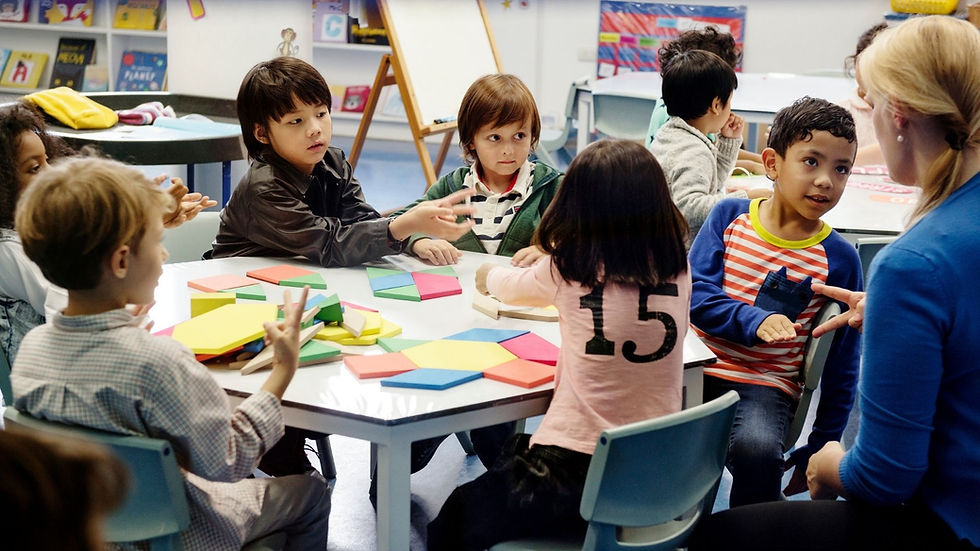
Mixed-age classrooms are a defining feature of many microschools. They bring real advantages: older students develop leadership skills, younger students stretch toward higher-level thinking, and everyone benefits from seeing learning modeled at different stages of development. But making this work requires thoughtful scheduling.
1. Anchor Blocks on Shared Themes With Differentiated Tasks
Rather than running separate lesson plans for each age group simultaneously, anchor your project block to a single broad theme.
For example, a unit on the water cycle might include:
Pre-K students: Observing and drawing rain.
Grade 2 students: Measuring and recording rainfall data.
Grade 5 students: Researching aquifer systems and writing explanatory paragraphs.
One shared theme creates multiple entry points, allowing one educator to guide the room without managing several parallel lessons.
2. Stagger Direct Instruction
When introducing a concept that requires direct teaching, stagger instruction by age group.
A practical flow might look like:
Begin with the group that needs the most guided instruction.
Assign independent practice once they understand the concept.
Shift your attention to another group for a similar, age-appropriate lesson.
This prevents the common issue of one group waiting while another receives instructions.
3. Use the Independent Block for Genuine Independence
An independent practice block works only when students can manage their own learning.
Early in the year, establish clear routines such as:
What should students do when they finish work?
Where to find materials and resources
How to ask for help without disrupting others
Once these systems are in place, you can use this time for small-group or one-on-one instruction with younger learners.
4. Build Structured Peer Learning Into the Collaborative Block
Peer learning can be one of the most powerful tools in a mixed-age classroom.
When structured intentionally:
Younger students receive guidance from near-peers.
Older students deepen their understanding through explanation.
Collaboration strengthens classroom culture.
Plan collaborative blocks that support real academic work rather than becoming informal supervision.
Example
During a literacy block:
5–6 year-olds work with you on phonics using tactile letter tiles.
9–10-year-olds complete an independent written response task.
You then rotate your attention while maintaining the same room, time block, and daily rhythm.
How The School House Anywhere (TSHA) Helps Educators Build a Strong Microschool Schedule?
Creating a consistent microschool daily schedule can be challenging, especially when educators are balancing mixed-age groups, hands-on learning, and operational responsibilities.

The School House Anywhere (TSHA) supports educators with a structured program built around the American Emergent Curriculum (AEC) for Pre-K to 6th grade, helping them organize meaningful learning experiences while maintaining a clear daily rhythm.
TSHA supports microschool educators in several practical ways.
Structured Six-Week Learning Sessions: The American Emergent Curriculum is organized into themed six-week sessions that help educators structure daily learning blocks, projects, and exploration.
Ready-To-Use Teaching Materials: Educators receive printable resources, worksheets, lesson materials, and educational films that support hands-on learning without extensive preparation.
Hands-On, Screen-Free Learning Framework: The curriculum emphasizes storytelling, projects, and real-world exploration, helping educators balance academic learning with experiential activities.
Progress Tracking Through Transparent Classroom: Integrated portfolio and progress tracking tools help educators document student learning and stay organized.
Live Educator Support and Office Hours: Regular online gatherings and scheduled office hours provide guidance for curriculum implementation and classroom challenges.
Resources For Starting And Running A Microschool: TSHA offers guidance on learning spaces, community building, and operational setup for educators launching microschools.
These resources provide a practical framework that helps educators maintain a structured microschool schedule while still allowing flexibility for exploration and project-based learning.
Final Thoughts
A good microschool daily schedule is less about rigid time slots and more about creating a reliable rhythm for the day. When students know what comes next and educators protect core learning blocks, the classroom naturally becomes more focused, productive, and calm.
If you want a clearer structure to build around, The School House Anywhere (TSHA) provides a practical framework through the American Emergent Curriculum. With ready-to-use learning sessions, teaching resources, and educator support, TSHA helps microschool leaders organize their day without having to build everything from scratch.
Have questions about planning your daily schedule? Contact TSHA to get guidance from their team.
FAQs
1. How early should students arrive before the microschool day begins?
Most microschools allow a short arrival window of 10 to 15 minutes. This gives students time to settle in before the structured learning schedule begins.
2. How do microschools manage transitions between learning blocks?
Many educators use visual timers, music cues, or short routines to signal transitions. Clear cues help students shift activities smoothly and maintain classroom momentum.
3. Can a microschool schedule include community-based learning activities?
Yes. Many microschools schedule regular field experiences, such as nature walks, local visits, or community projects, that extend learning beyond the classroom.
4. How often should educators update or redesign their microschool schedule?
Most educators review schedules at least once per academic term or unit cycle. Regular reflection helps adjust timing, activities, and routines based on student engagement and learning progress.
5. Do microschools schedule time for student choice during the day?
Many microschools include dedicated choice periods where students select projects, reading, or creative activities. This encourages autonomy while still fitting within the daily structure.

Comments