Microschools and Socialization: What Parents Should Know in 2026

One of the first concerns parents raise when considering microschools isn’t curriculum, cost, or structure; it’s socialization.
For generations, traditional schools have been treated as the default environment for developing friendships, communication skills, and peer awareness. Large classrooms, playground time, group projects, sports teams, these have shaped our understanding of what “normal” social development looks like.
So when families encounter microschools, smaller, community-based learning environments often serving 5 to 20 students, the question feels natural:
Can such a small environment really provide enough socialization?
The answer isn’t about numbers. It’s about structure, intentionality, and the quality of interaction. To understand microschools and socialization properly, we need to examine how social skills are actually formed and how different learning environments shape that process.
TL;DR
Social development is about the quality of interaction, not the number of peers.
Microschools typically serve 5–20 students, allowing for deeper relationships and closer mentorship from adults.
Multi-age grouping often strengthens empathy, leadership, and real-world communication skills.
Conflict resolution is usually coached directly rather than managed at scale.
Students are more visible, which increases accountability and participation.
Highly extroverted children may need additional outlets, such as sports or community programs.
Strong leadership and intentional structure determine whether a microschool supports healthy social growth.
What Are Microschools?
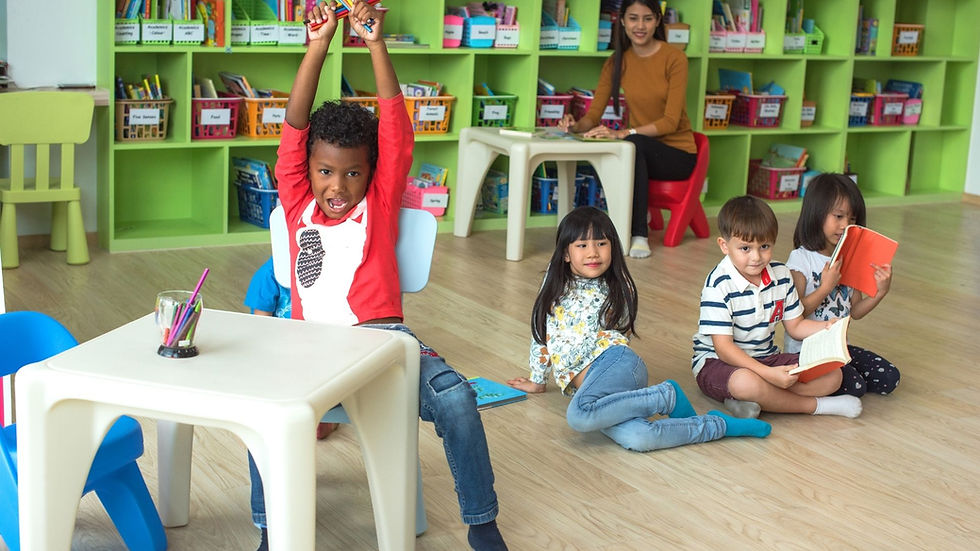
Microschools are small, community-based learning environments that typically serve 5-20 students. Unlike traditional schools, which organize students strictly by grade level and operate at scale, microschools intentionally keep enrollment low to prioritize relationships, flexibility, and personalized instruction.
They can be:
Teacher-led
Parent-founded
Hybrid homeschool partnerships
Faith-based or secular
Full-time or part-time
The defining feature of a microschool is not the curriculum. It is size and structure. Small enrollment changes how students interact, how adults guide learning, and how social development unfolds.
Because microschools operate on a smaller scale, socialization looks different from that in traditional classrooms. Students are more visible, conflicts are more manageable, and peer relationships tend to be deeper rather than broader.
Understanding this structure is essential before evaluating whether microschools and socialization truly align with your child’s needs.
What Do We Actually Mean by “Socialization”?
Before evaluating whether microschools provide enough of it, we need to define it.
Healthy social development is not simply exposure to many peers. It includes:
Learning how to resolve conflict
Understanding social cues
Managing emotions in group settings
Communicating disagreement respectfully
Collaborating toward shared goals
Building and maintaining friendships
Developing confidence in public speaking
Traditional schools offer scale dozens of peers daily, hundreds across a campus. But scale alone does not automatically create strong social skills. In many large settings, social dynamics form naturally, but not always constructively. Some children thrive. Others withdraw. Some dominate. Some remain socially invisible.
Microschools approach this differently. Because of their size, social interaction is rarely passive or unnoticed. It becomes part of the design of the learning environment rather than a side effect.
How Socialization Happens Inside a Microschool

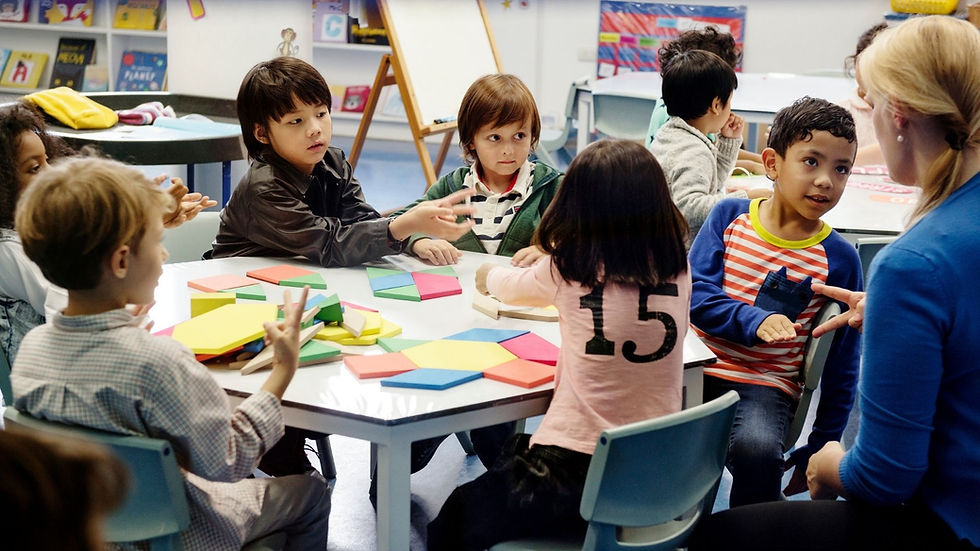
Social growth in microschools is usually more intentional and closely guided than in traditional settings. It’s embedded in the daily structure rather than limited to recess or group projects.
Multi-Age Interaction Builds Real-World Skills
Many microschools group students by age bands rather than strict grade levels. This changes the social dynamic significantly.
Older students naturally take on mentoring roles. Younger students observe advanced reasoning and communication styles. Instead of competing with peers at the same developmental stage, students learn to adjust their communication depending on who they are speaking with.
This mirrors real life more closely. In workplaces, communities, and families, we rarely interact only with people born in the same year. Multi-age environments tend to reduce comparison and encourage leadership, patience, and empathy.
Adults Actively Coach Social Skills
In a classroom of 25 to 30 students, teachers often focus on classroom management and curriculum pacing. Individual social conflicts may be addressed quickly, but there is limited time for coaching.
In microschools, lower student-to-adult ratios allow facilitators to observe subtle dynamics. If a child struggles to speak up, withdraws from group activity, or dominates conversations, it becomes noticeable early.
Rather than simply correcting behaviour, guides often teach students how to:
Express disagreement constructively
Ask clarifying questions
Reflect on their role in conflicts
Practice listening without interruption
Social skills become teachable moments instead of disciplinary interruptions.
Deeper Peer Relationships
Large schools expose children to many peers, but often result in smaller friendship circles within larger systems. Microschools, by contrast, create consistent daily interaction among a smaller group.
This consistency fosters familiarity and accountability. Students see the same peers across subjects and activities, which:
Encourages deeper conversation
Reduces social anonymity
Makes conflict resolution unavoidable (in a productive way)
Because students cannot easily avoid one another, they often learn to repair relationships rather than replace them.
Comparing Social Architecture: Microschools vs Traditional Schools
The difference between microschools and traditional schools is not simply size; it is social architecture.
Traditional schools provide breadth. Students encounter diverse personalities and social situations. This can be beneficial, especially for highly extroverted children or those seeking competitive social environments.
Microschools provide depth. The focus shifts toward sustained interaction, guided dialogue, and consistent peer engagement.
In large schools:
Social hierarchies can form quickly
Shy students may blend into the background
Teachers divide their attention among many students
In microschools:
Every student is visible
Social withdrawal is noticed early
Conflicts are processed rather than ignored
Neither system is universally better. The effectiveness of microschools and socialization depends heavily on leadership quality and the intentional design of the environment.
Common Myths About Microschools and Socialization
When families research microschools and socialization, they often encounter assumptions rooted in traditional schooling norms. Let’s address the most common myths directly and examine what actually happens in practice.
Myth 1: “Kids Need Large Peer Groups to Socialize Properly”
The assumption:More students = better social development.
The reality:Research on social development shows that the quality of interaction matters more than quantity. In large environments, children may experience:
Increased social comparison
Higher rates of exclusion or cliques
Superficial peer contact
Microschools prioritize consistent interaction within smaller groups, which often leads to:
Stronger friendships
More inclusive group dynamics
Greater emotional safety
Children don’t need hundreds of peers. They need meaningful relationships and guided social practice.
Myth 2: “Small Groups Limit Exposure to Different Personalities”
The assumption:Fewer students = limited diversity.
The reality:Many microschools use multi-age groupings and mixed learning teams. This often increases exposure to a range of maturity levels, abilities, and communication styles.
Instead of interacting only with same-age classmates, students engage with:
Younger peers (developing leadership)
Older peers (observing advanced reasoning)
Adults in mentorship roles
Social diversity doesn’t depend solely on numbers; it depends on structure.
Myth 3: “Microschool Students Become Socially Sheltered”
The assumption:Smaller settings protect children from “real-world” social challenges.
The reality:Healthy social development includes learning to navigate disagreement, collaboration, and conflict. In microschools:
Conflicts are addressed directly
Adults coach resolution skills
Students practice communication intentionally
Rather than avoiding social challenges, students often receive more guidance in handling them.
Myth 4: “Extracurricular Activities Are Limited”
The assumption:Smaller schools lack clubs, sports, or enrichment options.
The reality:Many microschools operate as academic hubs while families supplement with:
Community sports leagues
Arts programs
Co-ops
Volunteer opportunities
Local workshops
Social exposure becomes more distributed across environments rather than concentrated in a single institution.
Myth 5: “Microschools Can’t Prepare Kids for the ‘Real World’”
The assumption:Only traditional schools provide adequate social training.
The reality:The “real world” includes collaboration across ages, independent work, public speaking, problem-solving, and adult interaction, all common features of well-run microschools.
Social readiness depends more on:
Communication skills
Emotional regulation
Confidence
Adaptability
These can develop in multiple educational settings.
The question isn’t whether microschools provide socialization.
The real question is:
What kind of socialization do families want for their children?
Next, we’ll compare microschools and traditional schools side by side to clarify how their social environments differ structurally.
Are There Socialization Limitations in Microschools?

A balanced discussion matters. Microschools can pose challenges if not well-structured.
Limited Peer Variety
A small cohort means fewer personality types and fewer same-age friendships. Families sometimes supplement this with:
Sports leagues
Community theater
Faith-based youth programs
Regional homeschool or microschool meetups
The key is recognizing that socialization does not have to happen in a single building.
Transitioning to Larger Systems
Students moving from microschools to large high schools may need time to adjust to crowded environments, multiple teachers, and less individual attention.
However, students who have developed strong communication and leadership skills in small settings often adapt well once they understand the new structure.
Leadership Matters
A poorly structured microschool can feel socially limiting. A well-designed one can feel deeply supportive.
Intentional scheduling, collaborative projects, discussion-based learning, and adult mentorship are what determine whether social growth thrives.
How Microschools Intentionally Build Social Skills
One of the biggest differences in the microschools and socialization conversation is this:
In traditional schools, social development often happens incidentally.In microschools, it is usually designed.
Because of their size and flexibility, microschools can embed social learning directly into daily routines rather than treating it as something that happens only during recess.
Here’s how that works in practice.
1. Structured Collaborative Work (Not Just Group Assignments)
In many large classrooms, “group work” can mean one student leads while others disengage.
Microschools often design collaboration intentionally by:
Assigning rotating roles (facilitator, recorder, presenter)
Requiring shared accountability for outcomes
Reflecting on group dynamics after projects
Teaching students how to give constructive feedback
Because groups are small, adults can observe and coach interactions in real time.
Students don’t just complete tasks; they learn how to work with others.
2. Explicit Conflict Resolution Coaching
Conflict happens in every learning environment.
The difference is in response.
In microschools:
Guides mediate disagreements directly
Students practice using “I” statements
Reflection conversations are common
Emotional regulation is taught openly
Smaller communities mean conflicts cannot be ignored or hidden.They must be addressed, and that becomes a learning opportunity.
Over time, students develop:
Emotional awareness
Accountability
Perspective-taking
3. Mixed-Age Mentorship
Many microschools intentionally group students across ages.
This creates opportunities for:
Older students modeling maturity
Younger students asking questions freely
Natural leadership development
Peer tutoring and support
Instead of competing within the same-age cohort, students collaborate across developmental stages.
This strengthens confidence and empathy simultaneously.
4. Daily dialog and Discussion
Because of small class sizes, students typically:
Participate in whole-group discussions
Present ideas regularly
Engage in Socratic-style conversations
Reflect publicly on learning
Frequent speaking builds:
Articulation skills
Respectful disagreement
Confidence
Students are less likely to remain silent observers.
5. Real Community Integration
Many microschools incorporate:
Field experiences
Local partnerships
Service projects
Community-based learning
Students interact not only with peers but also with adults outside school settings.
This expands social exposure beyond a classroom bubble.
6. Accountability Through Visibility
In a microschool:
Everyone knows everyone.
Social behavior is visible.
Participation is noticeable.
This visibility often increases responsibility.Students recognize their role within the community.
There’s less anonymity and therefore less opportunity to disengage socially.
What Research Says About Small Learning Environments and Social Development

When discussing microschools and socialization, opinions are common, but evidence matters.
Research on small-school models and low student-to-teacher ratios consistently highlights several trends:
Students in smaller learning environments report stronger feelings of belonging.
Behavioral incidents tend to decrease as adult supervision and relational accountability increase.
Multi-age classrooms show improvements in empathy and peer mentoring behaviors.
Lower student-to-teacher ratios correlate with stronger communication skills and classroom participation.
Studies on social-emotional learning (SEL) further indicate that guided reflection and structured dialog, both common in microschools, strengthen emotional regulation and perspective-taking.
While microschools themselves are still an emerging model, research on:
Montessori environments
Democratic schools
Small private schools
Multi-age classrooms
suggests that social development does not require scale. It requires structure, mentorship, and consistency.
The takeaway is clear:Smaller environments do not automatically limit social growth. In many cases, they intensify it.
How Parents Can Evaluate Socialization in a Microschool
Rather than assuming success or failure, families should intentionally evaluate their structure.
When researching microschools and socialization, ask:
How are conflicts handled?
Are students grouped strictly by age, or are they intentionally mixed?
How often do students collaborate?
Are there structured discussions?
What community partnerships exist?
What extracurricular options are available?
How does the school support shy or dominant personalities?
Observe during a visit:
Are students speaking freely?
Do adults guide interactions or only manage behavior?
Does the atmosphere feel relational or transactional?
The health of the environment matters more than the enrollment number.
Who Grows Socially in a Microschool Environment?
Not every model fits every child.
Microschools often work especially well for:
Students who feel overwhelmed in large classrooms
Children who benefit from strong adult mentorship
Students who prefer deeper friendships over large friend groups
Learners who need emotional coaching
Families prioritizing intentional community
Students who may need supplementation:
Highly extroverted children seeking large peer networks
Students are deeply invested in competitive sports ecosystems
Teens who want large-scale social events daily
The model is not about less socialization.It is about different social architecture.
How TSHA-Supported Micro-Schools Help Close Learning Gaps

This is where intentional structure, not guesswork, makes the biggest difference.
Micro-schools built entirely on informal or self-created systems often struggle with consistency over time.
In contrast, TSHA-supported micro-schools are designed to balance flexibility with clarity.
TSHA supports micro-schools using the American Emergent Curriculum (AEC), a developmentally aligned, hands-on framework built specifically for small, learner-centered environments. One key advantage is TSHA’s packaged 6-week learning sessions, which help educators move beyond day-to-day planning and focus on meaningful progress over time.
These sessions provide clear learning goals, skill progression, and space for deep exploration, something many micro-schools lack.
Through TSHA, micro-schools benefit from:
A structured, hands-on AEC curriculum that connects subjects through real-world learning
Clear learning progressions across core subjects, reducing gaps in math and literacy
Non-screen, project-based instruction that supports diverse learning styles
Built-in progress and portfolio tracking tools that go beyond test scores
Instead of wondering whether students are “keeping up,” educators can see growth clearly- academically, socially, and emotionally.
This level of structure helps micro-schools deliver on the promise of personalization without sacrificing academic consistency.
When structure, support, and thoughtful design come together, micro-schools can move from uneven outcomes to meaningful, equitable learning experiences.
Conclusion
Concerns about microschools and socialization are valid, but they often stem from outdated assumptions about how social skills are formed. Social development is not about being surrounded by the most peers. It is about learning how to communicate clearly, resolve conflicts respectfully, collaborate across differences, and build meaningful relationships.
Microschools offer a different social model; one built on smaller communities, multi-age interaction, adult mentorship, and intentional guidance. When designed thoughtfully, they create environments where students are seen, heard, and coached through real social experiences rather than left to navigate them alone.
That said, success depends on structure. Strong leadership, clear routines, community partnerships, and open communication systems are what turn a small learning environment into a socially rich one.
If you're exploring whether a microschool is the right fit for your child or considering launching one, take the time to evaluate how social interaction is intentionally built into the daily experience.
At The School House Anywhere (TSHA), we help founders create learning communities where academics and social development grow side by side. Through developmentally aligned curriculum, educator coaching, and operational support, TSHA ensures that small schools don’t feel small in opportunity.
Ready to build or join a learning environment where social growth is intentional, guided, and meaningful? Explore how TSHA can support your journey today.
FAQs
1. Do microschools provide enough socialization for children?
Yes, but in a different structure than traditional schools. Instead of large peer groups, microschools focus on consistent interaction within smaller communities. Social skills are often coached intentionally, with multi-age collaboration, guided conflict resolution, and daily discussion built into the schedule.
The quality of interaction typically matters more than the number of peers.
2. Will my child struggle socially if they move from a microschool to a traditional high school?
Most students adapt well, especially if they have developed strong communication skills, emotional regulation, and confidence in small-group discussion. There may be an adjustment period due to larger class sizes and less individual attention, but foundational social skills transfer across environments.
3. Are microschools socially limiting because they have fewer students?
They can be if poorly structured. However, well-designed microschools intentionally build collaboration, mentorship, and community integration into daily routines. Many families also supplement their children's experiences with sports leagues, arts programs, faith communities, or local clubs to broaden their peer exposure.
4. How do microschools handle conflict between students?
Because of lower student-to-adult ratios, conflicts are typically addressed directly. Facilitators often coach students through disagreements using structured conversations, reflection, and communication techniques rather than simply issuing disciplinary consequences.
This can strengthen long-term social competence.
5. Do microschools offer extracurricular activities?
Some do internally, but many rely on community-based opportunities. Students may participate in local sports teams, music programs, theatre groups, volunteer work, or co-ops. Social interaction becomes distributed across multiple environments rather than confined to a single campus.

Comments