Home Schooling in Virginia: Best Programs and Alternatives

Homeschooling in Virginia can feel confusing at first. Parents often worry about choosing the right legal option, meeting state requirements, and avoiding mistakes that could affect their cchild'seducation.
Virginia allows homeschooling through several legally recognized options, each with its own documentation and annual requirements.
This guide explains how homeschooling in Virginia works, the choices families must make, and the exact steps parents can follow to remain compliant and confident year after year.
Overview
Homeschooling in Virginia is legal and flexible, but parents must follow specific legal pathways and annual requirements.
Families can choose from traditional homeschool curricula, online options, co-ops, microschools, and hybrid models.
The best option depends on a child’s learning style, family schedule, and desired level of structure.
Parents remain responsible for documentation, evaluations, and academic progress regardless of the model chosen.
What Parents Should Know About Homeschooling in Virginia
Homeschooling is legal in Virginia through specific state-recognized pathways. Parents are legally responsible for choosing one option, submitting the required documentation, and ensuring their child makes academic progress each year.
Here'swhat matters most at the outset:
Homeschooling is legal in Virginia, but families must formally choose a recognized option under state law.
There is no one-size-fits-all approach. Parents select the method that best fits their background, values, and their child's needs.
Annual documentation is required, including a notice of intent and proof of academic progress, depending on the option chosen.
Parents are legally responsible for their cchild'seducation, including curriculum choice, instruction, and recordkeeping.
Virginia does not approve or provide homeschool curriculum. That flexibility gives families freedom, but it also means parents must be proactive about understanding requirements and staying organized.
Just as important, homeschooling in Virginia is treated as home instruction, not private school enrollment. This distinction affects how families file paperwork, track progress, and communicate with their local school division.
Now that we've covered what parents should know at a high level, the next step is to understand which legal homeschooling options Virginia actually allows and how they differ.
How Homeschooling Can Support Mental Health and Life Skills
Many families in Virginia turn to homeschooling not only for academic flexibility but also to support their child’s emotional well-being.
A personalized learning environment can reduce stress, allow children to learn at their own pace, and limit unnecessary social pressure.
Homeschooling also creates opportunities to build essential life skills, such as independence, time management, communication, and problem-solving, through real-world learning and daily responsibilities.
Like any model, it works best when parents intentionally support social connection and emotional growth alongside academics.
Best Homeschool Programs in Virginia
Virginia gives parents wide latitude in how they homeschool, but that freedom often creates confusion. Best doesn't mean most popular; it means best aligned with your child's needs, your role as a parent, and Virginia's legal expectations.

Below, you'll find a deeper breakdown of homeschool program types, followed by specific programs Virginia families commonly choose, including why they choose them and where each option falls short.
1. Online Homeschool Programs
(High Structure, High Screen Time, Low Parent Teaching)
Online homeschool programs function much like traditional school, just at home. Lessons are delivered through videos, quizzes, and automated instruction. Parents oversee progress but rarely teach content directly.
Works best for:
Families who need predictable schedules
Parents working full-time
Older elementary or middle school students are comfortable online
Common tradeoffs:
Heavy daily screen time
Limited hands-on or experiential learning
Less flexibility to slow down or explore interests
Program options Virginia families use
Time4Learning – Popular for its self-paced format and affordability; often used as a core or supplement
Power Homeschool – Video-driven academics with automated grading; minimal parent instruction
K12 – Public and private virtual school options (not legally homeschooling in VA)
Connections Academy – Fully online public schooling with state oversight
Important Virginia note:If your child is enrolled in K12 or Connections Academy, they are considered public school students, not homeschoolers under Virginia law.
2. Traditional Parent-Led Curriculum Programs
(Moderate Structure, Parent as Teacher)
These programs provide textbooks, lesson plans, assessments, and pacing guides, but parents deliver instruction. This is the most familiar model for families transitioning out of public school.
Works best for:
Parents who want academic clarity
Families who value routine
Children who thrive with predictable expectations
Common tradeoffs:
Can feel rigid or school-like
Less flexibility for interest-led learning
Planning and grading still fall on parents
Program options
Calvert Education – Classical, structured, long-standing reputation
Abeka – Very structured, traditional Christian academics
BJU Press – Rigorous textbooks and assessments
Oak Meadow – Secular, gentle, project-based, lower screen use
3. Literature-Based & Unit Study Programs
(Low Screen, Integrated Subjects, High Engagement)
Instead of separating subjects, learning happens through books, discussions, projects, and real-world connections. History, science, writing, and art are often taught together.
Works best for:
Curious, discussion-oriented children
Families prioritizing depth over speed
Parents are comfortable facilitating conversations
Common tradeoffs:
Requires active parent involvement
Less standardized testing alignment
Progress tracking must be intentional for Virginia evaluations
Program options
Build Your Library – Secular, academically strong, flexible pacing
Torchlight – Inquiry-driven with global perspective
Five in a Row – Gentle, ideal for early elementary
4. Eclectic & Interest-Led Homeschooling
(Maximum Flexibility, Parent-Designed)
Families combine multiple resources instead of following a single program. One child may use online math, hands-on science, and literature-based history simultaneously.
Works best for:
Experienced homeschoolers
Children with uneven strengths
Families prioritizing autonomy
Common tradeoffs:
High planning demand
Risk of gaps without long-term vision
Documentation requires consistency for Virginia law
Common resources
Outschool – Live classes, clubs, enrichment
Khan Academy – Skill reinforcement
Local co-ops, tutors, museums, and libraries
5. Microschools & Learning Pods
(Small Groups, Community-Based Learning)
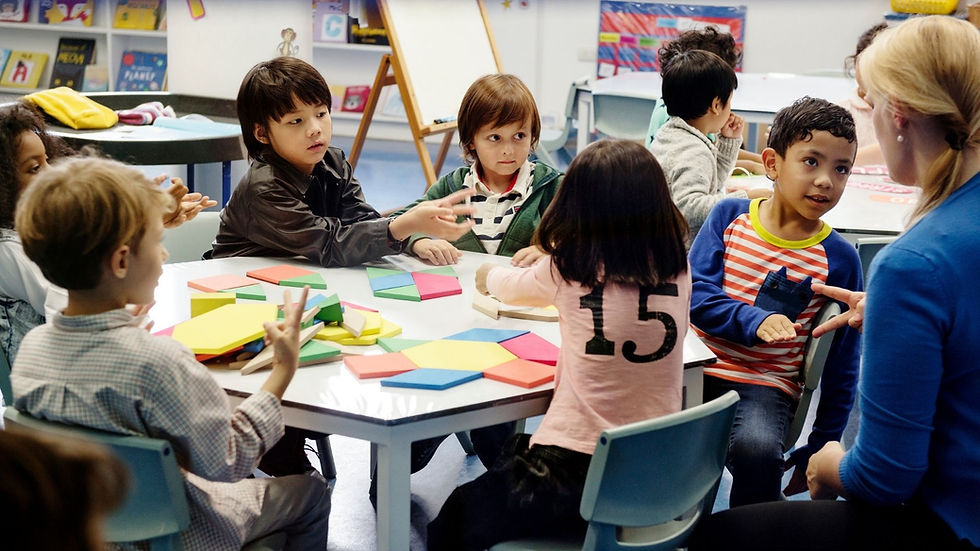
Microschools blend homeschooling with peer learning. Groups of 5–15 students learn together under a parent or guide.
Works best for:
Families seeking social learning
Mixed-age instruction
Parents want shared responsibility
Common tradeoffs:
Availability varies by region
Requires coordination among families
Program options
Prenda – Structured microschool model with screen-based core academics
Local Virginia homeschool co-ops and learning pods
Running a hybrid or micro-school? TSHA offers lesson modules and mixed-age projects, along with progress tracking, to make co-op or pod learning manageable.
Beyond traditional homeschool programs, some Virginia families choose alternative education models that change how learning is organized rather than which curriculum is used
Top Alternatives to Traditional Homeschooling in Virginia
Not every family wants a fully parent-led, at-home homeschool model. Many Virginia families explore alternative education paths that still offer flexibility while reducing daily teaching demands.

These options change how learning is organized, not just which curriculum is used.
1. Microschools (Small-Group Learning)
What this looks likeMicroschools are small learning communities (usually 5–15 students) led by a parent or guide.
Why families choose microschools
Built-in social interaction
Shared responsibility
Works well for mixed ages
Virginia considerations
Parents still file homeschool paperwork
Quality varies by model
Common options
Prenda – Structured model with screen-based core academics
Parent-led learning pods and local microschools
2. Homeschool Co-ops
What this looks likeFamilies meet weekly or biweekly for shared classes like science labs, writing, or art.
Why families choose co-ops
Community and collaboration
Shared teaching based on strengths
Limitations
Rarely is a complete academic solution
Parents remain responsible for core instruction
Co-ops work best as a supplement, not a replacement, for homeschooling
3. Hybrid Homeschool Programs
What this looks likeStudents attend classes part-time (1–3 days per week) and homeschool the rest of the time.
Why families choose hybrids
Balance of structure and flexibility
Access to teachers without full-time enrollment
Things to verify
Legal classification (private school vs homeschool)
Tuition and curriculum alignment
4. Online Public Schools (Not HHomeschooling
What this looks likeFully virtual public schooling with certified teachers.
Important distinction
Students are public school students, not homeschoolers
Curriculum and testing are state-controlled
Why do families choose this
No planning or grading
Free tuition
Why others avoid it
Heavy screen time
Limited flexibility
Even with flexible laws, many Virginia parents struggle with planning overload, documentation stress, and the challenge of sustaining learning throughout the year. This is where structured support can make a meaningful difference.
How TSHA Makes Homeschooling Easier in Virginia
If you're homeschooling in Virginia but ddon'twant to create or manage every lesson yourself, The School House Anywhere (TSHA) gives you a better way.
It's a hands-on, mastery-based full-year program rooted in a real-world curriculum, without screens or religious framing. You set the learning pace, but you're not left alone to search for materials or track progress.
Here's how TSHA fits your Georgia homeschool goals:
Full-year, mastery-based American Emergent Curriculum (AEC) aligns with academic expectations.
Hands-on, mixed-age projects reduce your prep burden across multiple kids.
Secular, non-screen learning keeps you in control and protects learning focus.
Optional educator support helps you stay aligned with reporting and tracking without feeling overwhelmed.
Transparent Classroom lets you see progress without turning your homeschool into a tech-driven setup.
TSHA makes homeschooling in Georgia manageable and flexible, allowing your child to explore while you guide with confidence.
Conclusion
Homeschooling in Virginia has moved beyond a single path. Families now have the freedom to shape learning around their child's interests, strengths, and daily rhythms, whether that means learning at home, joining a microschool, or blending different approaches.
For parents exploring these alternatives, TSHA provides a practical way to bridge gaps while keeping you in control of learning. It complements other programs as a considered choice for families shaping education around their cchild'sneeds.
Partner with The School House Anywhere (TSHA) today and shape a learning journey that fits your cchild'sworld.
FAQs
1. Is homeschooling legal in Virginia?
Yes. Homeschooling is legal in Virginia, but families must choose one of the state's recognized options and follow annual requirements, such as filing a Notice of Intent and submitting proof of academic progress.
2. Do I need teaching credentials to homeschool in Virginia?
No. Parents do not need a teaching license. Depending on the homeschool option you choose, you may need to show a high school diploma, a teaching qualification, or use an approved curriculum or evaluation method.
3. What subjects are required for homeschooling in Virginia?
Virginia law does not mandate a specific curriculum, but instruction should generally cover core subjects such as reading, writing, math, science, and history. Parents have flexibility in how and when these subjects are taught.
4. How do homeschoolers prove progress in Virginia?
Families typically submit an annual evaluation that may include standardized test results, a portfolio review, or an assessment by a qualified evaluator. Keeping organized records throughout the year makes this process easier.
5. Can homeschoolers in Virginia use programs like microschools or learning pods?
Yes. Many families homeschool through learning pods or microschools, as long as parents remain responsible for meeting Virginia's homeschool requirements and for filing the necessary paperwork.


Comments