Homeschool Preschool Plan Printable: A Step-by-Step Guide + Free Template

Homeschooling your preschooler does not need a perfect curriculum. It needs a clear, repeatable plan.
The problem most parents run into is not a lack of ideas. It is not knowing how to structure those ideas into a day that actually works for a three or four-year-old.
A homeschool preschool plan printable gives you that structure. It turns scattered activities into a predictable routine your child can follow, and you can sustain. In this guide, you will learn exactly what to include, how to build your daily and weekly rhythm, and get a printable you can start using right away.
Key Takeaways
Preschool homeschooling works best with short, flexible learning blocks of 10 to 20 minutes rather than rigid hour-long lessons.
A complete preschool plan covers six core areas: literacy, math, science, art, sensory/motor skills, and outdoor time.
Your daily plan should follow a consistent routine rather than a strict timed schedule, so your child knows what comes next without the pressure of the clock.
A printable weekly template helps you organize themes, materials, and activities in advance so each day runs smoothly.
Play is not filler. For ages 3 to 5, intentional play is the primary vehicle for learning language, math concepts, creativity, and social skills.
Why Preschoolers Need a Plan at All?
Many parents assume preschool is too young for structure. And in some ways, they are right. You do not need a rigid schedule that marches from subject to subject on the minute. What you do need is a predictable routine that your child can count on.
Research from the National Institute for Early Education Research (NIEER) and related early‑childhood studies shows that consistent daily schedules and clear expectations in preschool help young children feel more secure, regulate their behavior, and reduce challenging behaviors. A predictable routine is not about control. It is about giving your three or four-year-old an anchor.
Without any plan at all, here is what typically happens:
You end up doing the same activities repeatedly because they are the easiest to grab.
You miss entire developmental areas, like fine motor work or sensory play, because they were not on your radar for the week.
Your child senses your uncertainty and finds it harder to settle into learning time.
You feel like you are doing preschool wrong without knowing what right even looks like.
A simple printable plan solves all of this. It does not need to be complicated. It just needs to exist.
What Does Homeschool Preschool Actually Look Like?
Before you fill in any template, it helps to understand the realistic scope of preschool at home. Homeschool preschool for ages 3 to 5 typically includes 2 to 3 hours of intentional learning time per day. The rest of the day is play, meals, rest, outdoor time, and life skills.
That might feel shorter than you expected. But for preschoolers, two focused, high-quality hours beat six loosely structured ones every time. Their attention spans are short by design, not because something is wrong. A typical preschool learning block looks like this:
Time Block | What Happens |
10-15 min | Morning circle (calendar, weather, counting) |
15-20 min | Literacy activity (letters, sounds, read-aloud) |
10-15 min | Math or sensory activity (counting, sorting, shapes) |
15-20 min | Art, craft, or science exploration |
20-30 min | Free play and outdoor time |
Note: These are time ranges, not strict timers. If your child is deeply engaged in an activity, let them run with it. If attention drifts early, move on. The plan is your guide, not your judge.
Suggested Read: 9 Homeschool Technology Essentials for Smarter Learning in 2026
What to Include in Your Homeschool Preschool Plan?
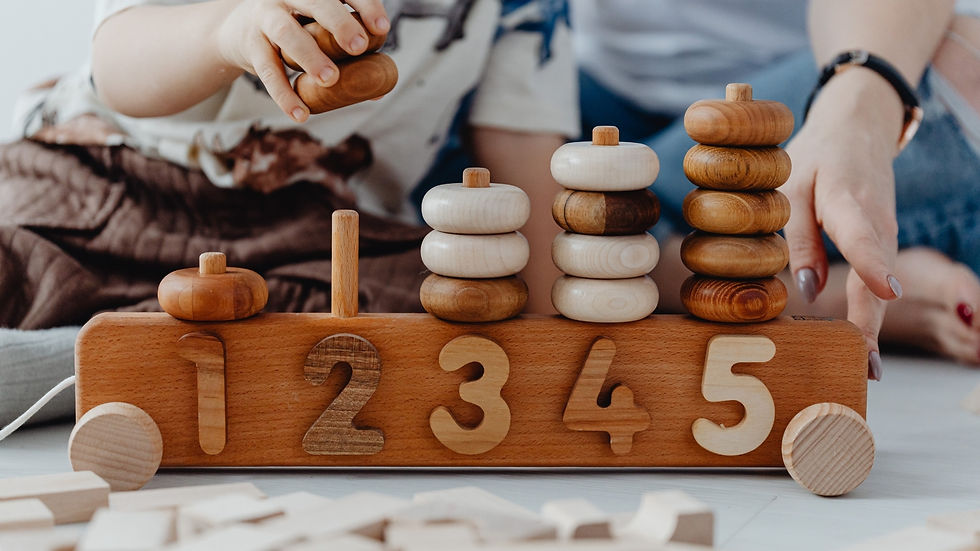
A solid preschool plan covers six core developmental areas. You do not need to hit every single one every single day. But your weekly plan should include each of them at least a few times.
1. Literacy and Language
This is the foundation of preschool learning. At ages 3 to 5, you are not teaching reading. You are building the skills that make reading possible later. Your literacy block should include:
Letter recognition activities (matching, tracing, finding letters in books).
Phonemic awareness games (rhyming, clapping syllables, beginning sounds).
Daily read-aloud from picture books, both fiction and non-fiction.
Oral storytelling and conversation to build vocabulary.
Keep literacy activities hands-on. Salt trays for tracing letters, alphabet puzzles, and sensory letter bins work far better than worksheets for this age.
2. Early Math
Preschool math is entirely concrete. Counting real objects, sorting toys by color, building patterns with blocks, and recognizing shapes in the real world are all math. You do not need a textbook. You need good materials and intentional activities like:
Counting collections (buttons, rocks, blocks) up to 10 or 20.
Sorting and classifying by color, size, and shape.
Simple patterns using household objects.
Number recognition through games, puzzles, and daily counting.
3. Science and Nature Exploration
Preschoolers are natural scientists. Everything is a question, and everything is an experiment. Your science block does not need lab equipment. It needs curiosity and access to the real world.
Weekly ideas include:
Observing and recording the weather each morning.
Growing something, even just a bean in a cup.
Simple sensory experiments (mixing colors, watching ice melt, floating and sinking objects).
Nature walks with a magnifying glass and a nature journal.
4. Art and Creative Expression
Art at the preschool level is about process, not product. The goal is not a beautiful finished piece. The goal is sensory engagement, fine motor development, and creative thinking. Rotate through:
Painting with brushes, sponges, hands, and everyday objects.
Tearing, cutting, and gluing collage materials.
Playdough sculpting and clay work.
Music, movement, and dance as creative expression.
5. Fine Motor and Sensory Activities
Strong fine motor skills are the prerequisite for writing. Before your child can hold a pencil comfortably, their hands need to build strength and coordination. Build this into every day through:
Playdough squeezing, rolling, and cutting.
Threading beads or pasta onto a string.
Using tweezers to transfer small objects.
Sensory bins with sand, rice, beans, or water beads.
6. Outdoor Time and Gross Motor Play
This one is non-negotiable. Children ages 3 to 5 need daily outdoor time, not as a reward, but as a developmental requirement. Running, climbing, jumping, and exploring outside support physical health, reduce stress, and actually improve focus during structured learning time.
Even 20 to 30 minutes of outdoor play makes a measurable difference in how your child engages with the rest of the day.
Wondering how to connect all of these areas into a cohesive, structured plan? TSHA's American Emergent Curriculum (AEC) does exactly that for Pre-K through 6th grade, with hands-on 6-week learning sessions that weave literacy, math, science, and art into real-world themes. Explore the AEC curriculum at tshanywhere.org |
Steps to Build Your Weekly Homeschool Preschool Plan

A weekly plan gives you the bird's-eye view. It helps you spread subjects across the week, plan materials in advance, and avoid scrambling to figure out what to do each morning. Here is how to build yours.
Step 1: Choose a Weekly Theme
Themes make preschool learning cohesive and memorable. A week organized around the theme of "Community Helpers" connects literacy (books about firefighters), math (counting toy fire trucks), art (painting firehouses), and science (how water puts out fires) into a cohesive experience.
You can choose themes seasonally, based on your child's interests, or from a structured curriculum. Good theme ideas for preschool include:
Nature and seasons (Fall, Winter, Spring, Summer).
Animals and habitats (Farms, Oceans, Rainforests).
Community and people (Helpers, Families, Neighborhoods).
Science wonders (Weather, Plants, Space, Water).
Letters and storytelling (one letter or story book per week).
Step 2: Map Activities to Each Subject Area
Once you have your theme, brainstorm two to three activities per subject area that connect to it. You will not do all of them. Having options means you can pick what works on any given day based on your child's mood, your energy, and the materials you have on hand.
Step 3: Gather Materials Ahead of Time
One of the biggest obstacles to a smooth preschool day is not knowing where anything is. Before the week starts, gather all books, art supplies, sensory materials, and printables you will need. A simple basket or labeled bin for the week keeps everything accessible and reduces your prep time each morning to under five minutes.
Step 4: Plan Your Daily Rhythm, Not Your Daily Schedule
Write down the order of activities rather than specific times. Your daily rhythm might look like this: circle time, literacy, outdoor time, lunch, rest, math or art, free play, stories before bed. The order stays consistent. The timing stays flexible.
This approach works especially well for families who travel, work from home, or have unpredictable routines. The rhythm travels with you. The clock does not.
Homeschool Preschool Weekly Plan Template (Printable)
Use the template below as your starting point. Fill in your theme, subject activities, books, materials, and notes. Print a fresh copy each week or laminate one to use with dry-erase markers.
Weekly Theme: _______________________________ Week of: _______________
Subject Area | Monday | Tuesday | Wednesday | Thursday | Friday |
Literacy / Read-Aloud |
|
|
|
|
|
Early Math |
|
|
|
|
|
Science / Nature |
|
|
|
|
|
Art / Creative |
|
|
|
|
|
Fine Motor / Sensory |
|
|
|
|
|
Outdoor / Gross Motor |
|
|
|
|
|
Books / Materials Needed |
|
|
|
|
|
Notes |
|
|
|
|
|
Daily Homeschool Preschool Schedule Template
Print one of these for each child and post it at their eye level. A visual schedule helps preschoolers understand what comes next, which dramatically reduces transitions and resistance.
Time Block | Activity | Notes/ Materials |
Morning Start | Circle time: calendar, weather, counting |
|
Literacy Block | Letter activity + read-aloud |
|
Math / Sensory | Counting, sorting, pattern play, sensory bin |
|
Outdoor / Movement | Outdoor play, nature walk, gross motor activity |
|
Snack Break | Snack + conversation time |
|
Art / Science | Craft, painting, science experiment, or exploration |
|
Fine Motor Activity | Playdough, beading, cutting, puzzles |
|
Free Play | Child-directed pretend play, building, and imaginative play |
|
Story / Wind Down | Read-aloud, quiet reflection, review of the day |
|
Tip: Laminate this daily template and use dry-erase markers so you can adjust it each week without reprinting. You can also add simple drawings or clip art next to each activity for children who cannot yet read, creating a visual schedule they can follow independently.
Example Filled-In Weekly Plan: Farms and Animals Theme
Here is what a completed weekly plan looks like in practice. This example uses the theme of Farms and Animals for a 4-year-old:
Subject | Monday/ Wednesday/ Friday | Tuesday/ Thursday |
Literacy | Read The Big Red Barn by Margaret Wise Brown. Find letters F, A, and B on each page. | Farm animal sounds matching activity. Retell the story in your own words. |
Math | Count farm animal figures. Sort by animal type. How many cows? How many pigs? | Pattern work: horse, cow, horse, cow. What comes next? |
Science | Discuss where food comes from. Plant a seed in a cup. Observe and record. | Compare a real egg to an image of a fertilized egg. What do farms grow? |
Art | Paint a barn with sponges and red paint. Add details with cotton balls for sheep. | Collage farm animals from magazine images. Label with beginning sounds. |
Fine Motor | Playdough farm: sculpt animals, fences, and food. | Use tweezers to feed plastic animals dry corn kernels into a bin. |
Outdoor | Nature scavenger hunt: find things from nature that animals eat (leaves, berries, seeds). | Gross motor: Be an animal! Gallop like horses, hop like rabbits, waddle like ducks. |
Books / Materials | The Big Red Barn, animal figures, red paint, sponges, cotton balls, and dry corn. | Magazines, scissors, glue, tweezers, plastic animals, and playdough. |
How to Track Progress Without Overwhelming Yourself?

One of the most common concerns parents have about homeschool preschool is tracking progress. How do you know if your child is developing on schedule? How do you keep records without spending more time on paperwork than on actual teaching?
Here is a simple approach that works for most preschool homeschool families:
Use a Weekly Observation Log, Not a Grade Book
Preschool progress is not measured in scores. It is measured in observations. Each week, spend five minutes writing down what you noticed:
What skills did your child demonstrate or attempt for the first time?
What activities engaged them most?
What did they find challenging and want to try again?
Any notable language, questions, or curiosity they expressed?
This takes five minutes and gives you far more useful information than any test could at this age.
Track Milestones by Developmental Area
Rather than tracking curriculum completion, track developmental milestones. For ages 3 to 5, the CDC and NAEYC identify key benchmarks across these areas:
Developmental Area | Key Milestones to watch for (Ages 3-5) |
Language & Literacy | Uses 4-6 word sentences, recognizes some letters, retells simple stories, and asks questions |
Math Readiness | Counts to 10+, sorts objects, recognizes basic shapes, understands more/less. |
Fine Motor | Holds pencil/crayon, cuts paper, builds with blocks, strings beads |
Social-Emotional | Takes turns, identifies basic emotions, plays cooperatively, follows 2-3 step instructions |
Science Thinking | Asks why and how questions, makes predictions, observes and describes, explores materials |
Note: Developmental milestones are ranges, not deadlines. Every child develops at their own pace. If you have specific concerns about your child's development, connect with your pediatrician.
Tracking preschool progress manually is manageable when you have a simple system. TSHA's Online Progress and Portfolio Management Tool takes this further, helping you organize records, document learning milestones, and meet any state portfolio requirements with ease. See how it works at tshanywhere.org |
Common Mistakes to Avoid in Homeschool Preschool Planning

Even parents with the best intentions run into the same few planning pitfalls. These are easy to avoid once you know what to watch for.
Treating the Plan Like a Contract
Your preschool plan is a tool, not a rulebook. If your child is deeply engaged in building with blocks when the plan says to start literacy, let them build. Intrinsic motivation and deep focus are exactly what you are trying to cultivate. The plan will be there tomorrow.
Planning Too Many Activities
More is not better at this age. Three to four focused activities per day are more than enough. When a parent overschedules, children feel rushed, transitions become battles, and nothing gets the attention it deserves. When in doubt, do less and go deeper.
Skipping Free Play in Favor of More Academics
Free play is not a reward for finishing school. It is school. Pretend play builds language, social reasoning, creativity, and emotional regulation. Children who have daily unstructured free play time actually develop stronger academic readiness than those whose days are entirely teacher-directed.
Using the Same Format Week After Week
Preschoolers thrive on novelty within a familiar structure. Keep the routine consistent while rotating activities, themes, and materials regularly to maintain engagement and curiosity.
Waiting Until the Plan is Perfect to Start
A rough plan you actually use beats a polished plan that stays in a folder. Start with the template in this guide, try it for two weeks, and adjust from there. Your best planning tool is the feedback you get from your own child.
Tips to Make Your Plan Work Every Week
A good plan only works if you can follow it consistently. These simple habits make your preschool routine easier to maintain week after week:
Prep materials on Sunday evening so Monday morning runs smoothly without scrambling.
Keep a rotating materials basket accessible to your child so they can choose sensory and fine motor activities independently.
Take photos of your child's work throughout the week. These become your portfolio and your memory.
Build buffer time between activities. Preschoolers transition slowly, and that is normal.
Revisit themes over multiple weeks. Depth beats breadth at this age. Spending two weeks on animals is more valuable than covering 10 topics in 10 days.
Follow your child's questions. If they ask why leaves change color during your outdoor time, that becomes science for the rest of the week.
These small adjustments are what make a preschool plan actually sustainable week after week.
At the same time, not every parent wants to plan themes, rotate activities, and track progress on their own. If you find yourself spending more time preparing than actually teaching, it may be a sign you need a more structured system.
The School House Anywhere (TSHA) offers the American Emergent Curriculum (AEC), designed to bring literacy, math, science, and creative learning into one cohesive, hands-on experience for Pre-K through 6th grade. Instead of building your plan from scratch each week, you follow guided learning pathways that naturally cover multiple developmental areas.
This works especially well for parents who want consistency and structure without having to design every activity themselves.
Final Thoughts!
Homeschool preschool does not require a degree in education, an expensive curriculum, or a perfectly organized schoolroom. It requires intentionality, a simple plan, and a willingness to follow your child's lead within a predictable structure.
The templates in this guide give you a solid foundation. Use the weekly planner to map out your themes and activities before the week begins. Use the daily schedule to anchor your child's day with a routine they can count on. Use the observation log to track growth without adding unnecessary paperwork.
Start simple. Adjust as you go. Your child is not behind, and neither are you.
If you want a structured, done-for-you approach, explore The School House Anywhere (TSHA) for hands-on, real-world learning. Register as a parent or an educator today and start your preschool homeschool journey with a program built around real-world, play-based learning for your kid.
Frequently Asked Questions
1. How many hours a day should I homeschool my preschooler?
Two to three hours of intentional learning activities per day is sufficient for preschool-aged children (ages 3 to 5). The rest of the day should include free play, outdoor time, meals, and rest. Longer structured sessions often lead to frustration and disengagement rather than better learning outcomes.
2. Do I need a formal curriculum to homeschool preschool in the US?
In most US states, preschool homeschooling is not regulated or required by law. You are not legally obligated to follow a formal curriculum for children under the age of kindergarten. That said, a structured program or plan helps ensure you are covering key developmental areas and makes your day easier to manage.
3. What subjects should I include in my homeschool preschool plan?
A complete preschool plan covers six areas: literacy and language, early math, science and nature exploration, art and creative expression, fine motor and sensory activities, and outdoor or gross motor time. You do not need a separate lesson for each day, but each should appear in your weekly plan multiple times.
4. How do I know if my preschooler is on track developmentally?
Focus on observing developmental milestones rather than curriculum benchmarks. For ages 3 to 5, watch for growth in language use, early math concepts, fine motor skills, social-emotional regulation, and curiosity. Your paediatrician is your best resource for any specific concerns about development.
5. Can I use this printable plan if my preschooler is also learning alongside older siblings?
Yes. The weekly template in this guide is designed to be flexible. You can adapt the subject areas to align with what older siblings are studying, making family learning time more cohesive. Many homeschool families use shared themes and read-alouds across multiple grade levels, then differentiate the activities by age.


Comments