Free Homeschool Programs in Texas: The Best Options for 2026

Homeschooling in Texas is on the rise, with over 500,000 children now being educated at home, a number that continues to grow.
Today, about 8-10% of school-age children in Texas are homeschooled, as families increasingly seek personalized and flexible learning options.
For parents looking to homeschool without breaking the bank, Texas offers online programs that deliver high-quality education, state-aligned curricula, and hands-on learning; all at no cost. These programs are designed to support parents and help students succeed outside the traditional classroom setting.
In this guide, we’ll explore the best free homeschool programs in Texas for 2026, giving you the tools to make an informed decision for your child’s education.
Key Takeaways
Texas offers various homeschool programs: Families can choose from online programs, public virtual schools, and hybrid models based on their child’s needs, preferences, and schedules.
Flexibility and customization are major advantages: programs allow parents to personalize their child’s learning experience, whether through hands-on activities or self-paced online learning, to match their unique style.
Programs meet state standards: Even though Texas doesn’t require state-approved curriculums, many programs are designed to ensure students meet Texas’ educational milestones in core subjects like math, science, and history.
Affordable education without compromising quality: Homeschool programs provide families with high-quality resources and state-aligned content while eliminating the financial burden of private schooling.
Is Homeschooling Legal in Texas? What You Need to Know
Yes, homeschooling is legal in Texas, and the state offers some of the most flexible homeschooling laws in the U.S. In fact, Texas is a highly favorable state for homeschooling families due to its minimal regulatory requirements and emphasis on parental rights in education. Here are some key homeschooling laws in Texas:
Unlike some other states that have strict homeschooling regulations, Texas keeps things relatively simple and straightforward. Here’s what you need to do to legally homeschool in Texas:
Notify the State: Texas does not require formal approval from the state to homeschool. However, parents must notify their local school district if they plan to withdraw their child from public school to begin homeschooling. This is typically done by submitting an affidavit of intent to homeschool, but it’s a one-time notification and not a recurring requirement.
Curriculum Requirements: The curriculum you choose for homeschooling in Texas does not need to be state-approved. However, the law does require that the curriculum be “bona fide” or “genuine,” and it should cover basic educational subjects such as:
Reading
Spelling
Grammar
Mathematics
History
Science
While parents have the freedom to select the curriculum that best fits their child’s learning style, it must meet these core subjects’ minimum standards.
Instructional Time: Texas law mandates that homeschooling hours be at least 180 days per year, and instruction should occur for at least 3 hours per day for elementary grades (grades K–6). While there’s no formal tracking by the state, this is an important guideline to follow for compliance and to ensure your child is getting a proper education.
Record Keeping: Texas law does not require parents to submit records or formal reports to the state. However, it’s a best practice to keep records of lessons, grades, and any assessments you conduct, especially in case of any future inquiries from the school district. You’ll also want to maintain a portfolio of work completed throughout the year, which can serve as valuable evidence of educational progress if needed.
Check out our guide on Microschools: Legal Considerations and Requirements You Must Know.
Now that you understand the legal framework for homeschooling in Texas, let’s explore why choosing the right program is crucial for ensuring your child’s success in this flexible and rewarding educational path.
Why Choose a Free Homeschool Program in Texas

Homeschooling offers many benefits, but the cost of high-quality resources can be a barrier. In Texas, homeschool programs provide a solution, giving families access to flexible, personalized education without the financial burden of private schooling or expensive materials. Here's why choosing a homeschool program in Texas could be the best option for your family in 2026.
1. Flexibility and Convenience
Texas homeschool laws are already flexible, and programs take that even further. With online platforms, self-paced learning, and customizable schedules, parents can adapt their child’s education to fit their lifestyle, whether you’re a working parent or living a digital nomad lifestyle.
2. Tailored to Your Child's Needs
Each child learns differently, and programs allow for personalized learning. You can adjust the pace and focus of the curriculum based on your child’s strengths and weaknesses. Whether they excel in one subject or need extra help in another, homeschool programs allow you to customize their learning experience.
3. Access to High-Quality Educational Resources
Many homeschool programs provide premium educational resources, including interactive lessons, printable worksheets, and hands-on activities. These resources ensure that your child receives an academically rigorous education without any added costs.
4. State-Aligned Standards
Programs in Texas align with state standards, ensuring that your child is meeting the required milestones in subjects like math, science, history, and language arts. This gives you the peace of mind that they are getting a quality education and are prepared for state testing.
5. Community Support and Networking
Texas offers a vibrant homeschool community, with many programs connecting families to local co-ops, support groups, and extracurricular activities. These networks offer tutoring, field trips, and socialization opportunities to make homeschooling a collaborative experience.
6. Extracurriculars and Advanced Learning Opportunities
Some programs also offer dual enrollment in community colleges or advanced courses, allowing older students to earn college credits while still in high school. Additionally, extracurricular activities like sports, music, and art are often integrated, giving your child a well-rounded education.
Homeschooling in Texas offers flexibility, choice, and support, but which program is right for you? Let’s explore the various types of homeschool programs available to see what suits your family’s needs.
Types of Homeschool Programs Available
Texas offers a wide variety of homeschool programs, each catering to different learning needs and preferences. Whether you prefer online learning, community-based education, or a flexible mix of both, there are options to fit your family’s lifestyle. Here’s an overview of the main types of homeschool programs available to Texas families in 2026:
1. Online Homeschool Programs
These programs provide a fully structured, online curriculum that families can use at home. They typically include interactive lessons, videos, quizzes, and assignments, offering a comprehensive education experience. Online homeschool programs are often self-paced, allowing students to progress at their own speed while meeting state educational standards.
2. Public Virtual Schools
Some Texas school districts offer tuition-free virtual schools, providing families with an online education that’s officially recognized by the state. These schools offer state-aligned curriculums and are taught by certified teachers, but they give families the flexibility of homeschooling. Public virtual schools are a good option for families looking for a structured learning environment without the cost of private school.
3. Hybrid Homeschooling Models
Hybrid programs combine online learning with in-person instruction. In these models, students typically complete coursework online while attending in-person classes or community-based activities for certain subjects or extracurriculars. Hybrid homeschooling allows families to balance flexibility with structure, and it can be especially beneficial for students who need hands-on learning or social interaction with peers.
4. Supplemental Learning Resources
These free resources include websites, apps, and tools that support homeschooling. They often provide subject-specific lessons, interactive exercises, and hands-on activities. Many parents choose to incorporate these free resources into their homeschool routines to enhance their child's learning experience. These resources allow for personalized learning and can be used alongside other homeschool programs.
5. Community-Based Homeschool Co-ops
Community co-ops are formed when a group of homeschooling families comes together to share resources, teaching duties, and extracurricular activities. These co-ops often offer free classes, field trips, and support groups for both students and parents. They foster a sense of community and collaboration while still allowing families to maintain control over their child’s education. Co-ops are perfect for families seeking socialization opportunities and peer interactions.
After exploring the different types of homeschool programs available in Texas, it's important to understand the specific curriculum options that align with your family’s goals.
Most Popular Free Homeschool Programs in Texas
When it comes to homeschooling, finding a quality curriculum that aligns with your educational goals is key. Fortunately, several curriculum options in Texas can provide your child with a structured, engaging, and hands-on learning experience. Below are some of the most popular homeschool curriculum options:
1. TSHA (The School House Anywhere) Curriculum

TSHA (The School House Anywhere) offers a comprehensive, screen-free curriculum designed for Pre-K to 6th grade, with a focus on hands-on, real-world learning. The curriculum follows the American Emergent Curriculum (AEC), which integrates core subjects like math, science, and language arts through experiential learning and project-based activities.
Free Curriculum Resources
TSHA offers free resources that include:
Lesson guides, printable worksheets, and activity suggestions
Hands-on learning activities like experiments, storytelling, and nature walks
State-aligned, developmentally appropriate content that helps children learn through interactive, engaging activities
Support for parents with tips, teaching suggestions, and curriculum organization
These free materials are perfect for families who want to use quality resources without committing to a paid program.
Paid Program: The Full TSHA Curriculum
For those seeking a more structured, comprehensive experience, TSHA’s paid program offers:
A fully developed curriculum with lesson plans, educational films, and detailed activity guides
24/7 live support for parents and educators, helping to guide your homeschooling journey
Access to Transparent Classroom tools for progress tracking and maintaining accurate academic records
A supportive community of homeschooling families, offering socialization opportunities and guidance
Real-world applications for all subjects, encouraging problem-solving, critical thinking, and creative learning
While TSHA’s full curriculum is a paid option, it offers a well-rounded, high-quality education that’s perfect for families seeking a premium homeschooling experience.
TSHA offers a well-rounded, flexible, and engaging curriculum that’s perfect for families who want to homeschool their children without the worry of screen overload or high costs.
2. Easy Peasy All-in-One Homeschool

Easy Peasy is a completely free online homeschool curriculum that offers a complete year of lessons for children from Pre-K to 8th grade. The program includes everything from math and reading to science and history, with all materials available online. Easy Peasy is perfect for parents who want a structured approach with minimal setup.
Comprehensive Coverage: Easy Peasy covers all the core subjects and offers additional resources for electives and extra-curriculars.
Parent-Friendly: The lessons are laid out in a simple, step-by-step format, making it easy for even new homeschool parents to get started.
Interactive & Engaging: The curriculum uses online videos, worksheets, and activities to keep kids engaged and motivated.
3. Freedom Homeschooling
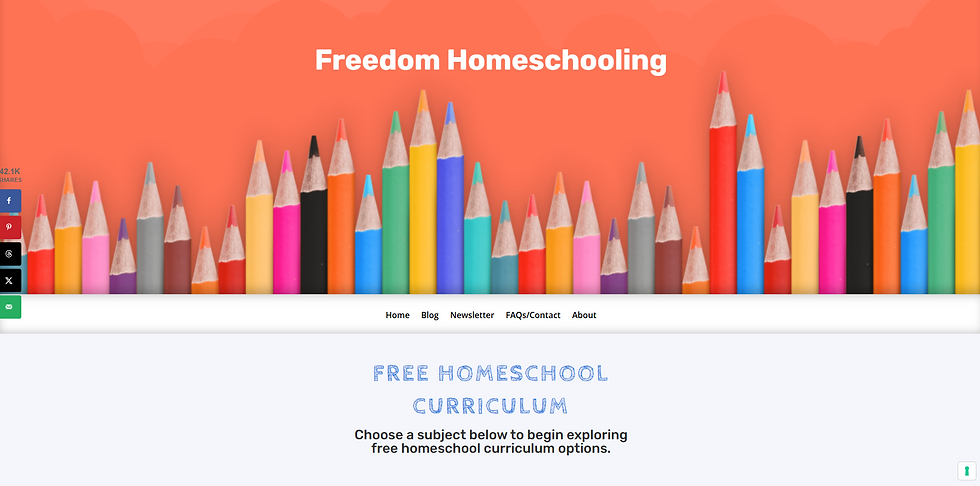
Freedom Homeschooling offers a comprehensive list of free curriculum resources, organizing them by grade and subject. It’s designed for families who want to mix and match materials based on their child’s needs. Freedom Homeschooling is an excellent resource for parents who want flexibility in creating a personalized education plan for their child.
Grade-Based Organization: Resources are clearly categorized for each grade level, making it easy to find age-appropriate materials.
Subject Variety: The website offers free resources for a wide range of subjects, from math and language arts to STEM and foreign languages.
4. Khan Academy

Khan Academy is a well-known, completely free resource that offers a wide range of online lessons across subjects, including math, science, history, economics, and test preparation. The program provides a personalized learning dashboard that allows students to work at their own pace, mastering skills before moving on to more advanced topics.
Wide Range of Subjects: Khan Academy offers video lessons, practice exercises, and quizzes to help students master content.
Self-Paced Learning: Students can choose topics they want to focus on and progress as they understand each concept.
5. Ambleside Online

Ambleside Online is a free, literature-based homeschool curriculum for grades K-12. It focuses on classical education and emphasizes literature, history, and art to help children develop critical thinking and a love for learning. Ambleside Online follows the Charlotte Mason approach, which is known for its hands-on learning, nature study, and narration.
Literature-Rich: Ambleside offers a rich selection of classical books for students to read.
Character Building: The curriculum integrates character development through stories and meaningful learning experiences.
6. CK-12

CK-12 is a free online platform that provides interactive lessons and practice problems in STEM subjects (science, technology, engineering, and math). The platform is highly customizable, allowing students to adjust their learning path based on their strengths and weaknesses.
Interactive and Adaptive: Students can interact with the lessons through video tutorials and virtual labs.
Advanced Learning Options: CK-12 also offers advanced subjects like AP courses, engineering, and coding.
Now that you’re familiar with the most popular homeschool curriculum options available in Texas, it’s time to consider how to choose the right program that best fits your child’s learning style, your family’s schedule, and your educational goals.
How to Choose the Right Program for Your Family
Choosing the right homeschool program is essential to your child’s success. Here are some key factors to consider when selecting the best program for your family in Texas:
Consider Your Child’s Learning Style: Think about how your child learns best, whether through interactive lessons, hands-on activities, or auditory materials.
Evaluate Your Family’s Schedule: Does your family need a structured program with fixed hours, or do you prefer the flexibility to set your own schedule?
Assess Your Teaching Style: If you’re new to homeschooling, look for programs with step-by-step instructions and plenty of support, like TSHA. If you prefer more independence, choose a program that allows for less parental involvement.
Set Educational Goals: Determine whether you want a program that emphasizes academic rigor or one that focuses on creativity, problem-solving, and real-world learning experiences.
Look for Community Support: Find a program that offers 24/7 support, connects you with other homeschooling families, and provides resources for both educational guidance and socialization.
Check for Flexibility with Testing and Accreditation: If your child needs to meet state requirements or prepare for tests, make sure the program aligns with Texas state standards and offers options for accreditation or state testing.
By considering these factors, you can select the best homeschool program for your child’s needs and your family’s lifestyle.
Conclusion
Homeschooling in Texas offers incredible flexibility and customization, and with the wide range of programs available, families can provide a high-quality education without the financial strain of private schooling. Whether you prefer a structured online curriculum, hands-on learning, or more flexibility in your daily schedule, there’s a program that suits your family’s needs.
As you consider the best homeschool programs in Texas for 2026, remember to prioritize your child’s learning style, your family’s lifestyle, and your educational goals. With so many options, you can find a program that ensures your child thrives academically and personally.
If you’re looking for a screen-free, affordable, and hands-on learning experience, TSHA (The School House Anywhere) offers an exceptional solution. Their American Emergent Curriculum (AEC) provides a flexible, state-aligned education that fosters critical thinking, creativity, and real-world problem-solving. With 24/7 support and a community of like-minded families, TSHA is an ideal choice for parents who want a personalized, high-quality education for their children.
Get Started with TSHA Now and give your child the education they deserve, all while staying connected to a supportive, caring community.
FAQs
1. Are Free Homeschool Programs Really Effective?
Yes, many free homeschool programs in Texas are designed to meet state standards and provide a high-quality education. These programs cover core subjects like math, science, language arts, and history and offer resources like videos, worksheets, and interactive lessons that make learning engaging and effective.
2. How Do I Know Which Homeschool Program Is Right for My Child?
Choosing the right program depends on your child’s learning style and your family’s schedule. If your child learns best through hands-on activities, look for programs that emphasize real-world learning. If your child needs a more structured approach, consider programs that offer a full curriculum with set schedules and teacher support.
3. Do I Need to Follow a Specific Curriculum in Texas?
Texas has minimal homeschooling regulations, meaning you don’t have to follow a state-approved curriculum. However, the curriculum should cover core subjects like math, science, reading, and history. You have the flexibility to choose the curriculum that best suits your child’s needs.
4. How Much Time Should I Spend Homeschooling Each Day?
Texas law suggests homeschooling for at least 3 hours a day for elementary grades, amounting to 180 days per year. However, many parents find that learning can be flexible, with the ability to incorporate field trips, real-world activities, and self-paced learning into their homeschooling routine.
5. Can My Child Still Participate in Extracurricular Activities While Homeschooling?
Yes, homeschooled students in Texas can participate in extracurricular activities like sports, music, and clubs. Some school districts allow homeschooled children to join public school extracurriculars, and there are also homeschool co-ops and community programs that offer socialization and enrichment activities.


Comments