Strategies to Enhance Student Engagement in Kindergarten Lessons

A kindergartener’s attention span lasts barely as long as a soap bubble, fleeting, delicate, and gone with the slightest distraction. According to the CDC, young children can focus for just 5-10 minutes on a single task, which makes traditional teaching feel like trying to catch fireflies with a rake. Yet, these early years are where curiosity blooms fastest.
The challenge? Turning boredom and distraction into wonder and engagement. In today’s classrooms, where strict learning falls flat, educators need strategies that spark joy, movement, and discovery. In this blog today, we will learn about how to engage kindergarten students in learning with some effective strategies!
What is Student Engagement in Kindergarten?
Student engagement in kindergarten refers to how actively, emotionally, and mentally involved young children are in their learning experiences through participation, curiosity, excitement, and focus during classroom activities.
In a kindergarten setting, engagement isn’t just about sitting still or raising hands. It’s the sparkle in a child’s eye during storytime, the eagerness to try a new puzzle, or the giggles while learning through play. At this age, engagement is deeply tied to emotional safety, hands-on activities, and freedom to explore.
Here’s why proper student engagement in kindergarten is important:
Builds strong learning foundations: Engaged children absorb basic concepts like numbers, letters, and social skills more effectively, setting the stage for long-term academic success.
Supports emotional development: When students feel interested and included, they gain confidence, empathy, and resilience, key skills for life beyond the classroom.
Boosts creativity and critical thinking: Activities that capture attention inspire children to ask questions, solve problems, and think independently.
Encourages positive classroom behavior: Engagement reduces restlessness and distraction, leading to smoother routines, fewer conflicts, and a more cooperative atmosphere.
Fosters a love for learning: When learning feels fun and meaningful, students are more likely to carry a positive attitude toward school into later grades.
In kindergarten, engagement is the heartbeat of effective teaching; it’s what turns routine lessons into joyful journeys.
With The School House Anywhere (TSHA), you can start homeschooling or microschooling your K-6 grade child anywhere in the world. We offer a robust learning program based on the American Emergent Curriculum (AEC), emphasizing an interconnected and developmentally aligned educational structure. We offer an extensive library of educational films, samples, and printable materials, facilitating a rich and engaging learning experience.
Next, we will explore some of the simple yet effective strategies to engage kindergarten students in learning!
Strategies for How to Engage Kindergarten Students in Learning
Keeping kindergarteners engaged means blending curiosity with movement, color, and creativity. These strategies are designed to spark interest, support active learning, and make every lesson feel like an adventure. Here are the strategies:
Strategy 1: Interactive storytelling and read-alouds
Storytime becomes magical when it’s more about bringing stories to life. Interactive storytelling and read-alouds invite kindergartners to immerse themselves in tales with their voices, hands, and hearts. With expressive tones, character voices, and simple prompts, teachers can turn a quiet reading moment into a dynamic group experience.
Examples:
Use character voices and sound effects: Change your tone for different characters and add fun sound effects like animal noises or thunderclaps to make the story immersive.
Pause and ask open-ended questions: Stop occasionally to ask, “What do you think will happen next?” or “How would you feel if you were the bunny?” This builds prediction and empathy skills.
Include hand motions and actions: Choose books with repetitive phrases and pair them with claps, jumps, or movements. For example, flap arms like a bird during a story about flying.
Let students participate as characters: Assign simple roles and let students act out parts of the story using props or puppets, great for boosting confidence and comprehension.
Use picture books with rich visuals: Choose books with bold, detailed illustrations and ask students to “read” the pictures and describe what they see. This builds observation and vocabulary.
Strategy 2: Incorporate Hands-on activities
Little learners thrive when they can touch, build, and move while they learn. Hands-on activities turn abstract concepts into real experiences, letting kids explore, build, and discover through touch and movement. These activities make learning stick by engaging all the senses. Plus, they spark joy, creativity, and independence, key ingredients in early childhood education.
Examples:
Math with manipulatives: Use colorful counters, blocks, or beads to teach counting, addition, and pattern-making. For example, sort buttons by color and shape for a fun math activity.
Science experiments: Let students mix baking soda and vinegar to watch a fizzy reaction or plant seeds in cups to observe growth over time. These simple experiments ignite curiosity and observation skills.
Alphabet and phonics crafts: Make a letter of the week with pasta, sandpaper, or yarn. Kids can trace or decorate letters to connect tactile learning with literacy.
Sensory bins for exploration: Fill bins with rice, beans, or kinetic sand and hide small objects inside. Use them for themed learning like “find all the letter Bs” or “dig for shapes.”
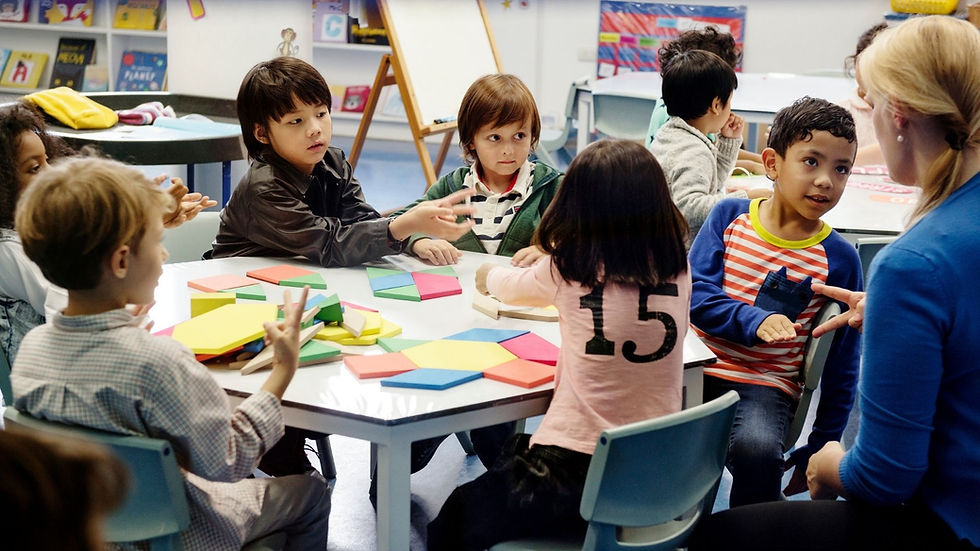
Puzzle and building activities: Use tangrams, magnetic tiles, or LEGO bricks to solve problems, build structures, or match shapes, great for spatial awareness and teamwork.
Strategy 3: Music, songs, and movement integration
Music and movement are the secret ingredients that turn everyday lessons into joyful, memorable experiences. For kindergarteners, rhythm and melody create an instant connection to learning, whether it's singing the alphabet or dancing to a counting song. When kids move their bodies while learning, it boosts focus, builds coordination, and keeps energy flowing in the best way.
Examples:
Sing to teach core concepts: Use songs like “The Days of the Week” or “Skip Counting by 2s” to teach key skills. Simple tunes help kids memorize effortlessly and have fun doing it.
Movement-based learning songs: Play action songs like “Head, Shoulders, Knees, and Toes” or “Going on a Bear Hunt” where kids mimic motions—great for reinforcing vocabulary and listening skills.
Create your own classroom jingles: Make up fun songs for transitions like lining up, cleaning up, or putting away supplies. Rhymes and repetition make routines smoother and more enjoyable.
Dance breaks between lessons: Use short dance videos or freeze dance games between subjects to refresh attention and burn off extra energy. It helps reset focus for the next activity.
Instrument play and rhythm games: Give kids tambourines, shakers, or clapping patterns to explore beats, patterns, and sounds. It’s a fun way to build motor skills and early math concepts too.
Strategy 4: Create mini-worlds with fun learning corners
Themed learning centers turn your classroom into a hands-on, self-guided playground of discovery. Each corner offers a different “mini-world,” from a math market stall to a storytelling nook, where kindergarteners can explore at their own pace. By rotating tasks regularly, you keep content fresh and allow children to revisit skills in new contexts, fostering independence, choice, and sustained curiosity.
Examples:
Set up distinct zones: Create areas like a “Number Café” with play money and menu cards, a “Science Lab” with simple materials for sorting or mixing, and a “Story Corner” stocked with puppets and picture books.
Design task cards: Prepare laminated cards that explain each activity step by step. For instance, at the Number Café, one card might prompt “Take three pretend coins and buy a toy from the menu, what’s your change?”
Rotate weekly themes: Change the center’s focus every week, e.g., “Garden Week” in the Science Lab where students plant seeds one day and categorize leaves the next, keeping interest high.
Group students in small teams: Assign children to different centers in short intervals (10–15 minutes). A timer signals when it’s time to swap, so they experience every theme without lingering too long.
Incorporate reflection stations: At each center, include a “Think Spot” where kids draw or talk about what they learned, like sketching plant growth or writing a short sentence about their favorite café purchase.
Strategy 5: Role play and dramatic play scenarios
Role play transforms everyday lessons into live adventures, inviting kindergarteners to step into characters’ shoes and act out stories or real-world situations. Through dramatic play, children rehearse social skills, language, and problem-solving while having fun. It’s a dynamic way to deepen understanding and build confidence in a safe, playful setting.
Examples:
Create a “Pretend Store”: Set up a mini grocery with empty food boxes, play money, and shopping bags. Kids take turns as cashier or customer, practicing counting, polite conversation, and decision-making.
Story reenactments: After reading a picture book, assign roles, like the brave mouse or wise owl, and let students act out key scenes. This boosts comprehension, sequencing, and expressive language.
Community helper corner: Provide costumes or props for firefighters, doctors, and mail carriers. Children role-play responding to calls, examining “patients,” or delivering letters, learning about different jobs and empathy.
Dramatic storytelling with props: Offer a basket of hats, scarves, and simple masks. Prompt children to invent characters and scenarios, such as a pirate ship adventure, encouraging creativity and narrative skills.
Problem-solving skits: Pose a social challenge (e.g., two friends want the same toy) and assign roles. Kids act out conflict resolution strategies, practicing empathy, negotiation, and respectful communication.
Strategy 6: Use of colorful visuals and real-life objects
Bright images and tangible items transform abstract ideas into concrete experiences for little learners. When kindergarteners see vivid charts or hold real fruit, their brains link sight and touch with new concepts, boosting memory and understanding. These sensory-rich cues also spark curiosity and conversation, making lessons more lively and relatable.
Examples:
Vibrant classroom posters: Hang large, illustrated charts, for example, a rainbow-colored number line or alphabet mural. Refer to these visuals during lessons to reinforce counting or letter sounds in a fun, memorable way.
Real-life object show-and-tell: Bring in everyday items like pinecones, toy cars, or kitchen utensils. Let children handle each object, describe its features, and relate it to the lesson, such as sorting shells by size in a math activity.
Photo-supported instructions: Create step-by-step visual cards with photos showing how to wash hands or set up a science experiment. Kids follow each picture in sequence, gaining independence and clarity through clear, real images.
Interactive anchor charts: Build charts collaboratively, like a “Word of the Day” board filled with colorful pictures of that word in different contexts. Invite students to add their own drawings or cut-outs to deepen ownership and recall.
Object-based vocabulary bins: Prepare themed bins (e.g., kitchen, farm, garden) filled with miniature models or real items. During language time, students pick an object and use it to construct sentences.
Strategy 7: Student choice and voice in activities
Empowering kindergarteners to make decisions about their learning nurtures ownership, confidence, and engagement. When children feel their ideas matter, they dive into activities with greater enthusiasm and creativity. By weaving choice and voice into lessons, teachers create a vibrant classroom culture where each child’s interests help shape the learning journey.
Examples:
Choice Boards: Offer a simple grid of 4–6 activity options, like drawing a story scene, building with blocks, or practicing letters with playdough, and let students pick which to complete.
Interest Centers: Rotate thematic centers based on student ideas. If the class shows curiosity about insects, set up an “Insect Investigation” table with magnifying glasses, pictures, and real specimens for kids to explore at their own pace.
Student-Led Questions: Invite children to jot or draw questions about the day’s topic, such as “Why do plants need water?” then choose a few to investigate together.
Voting on Story Topics: At morning circle, present two or three story themes (e.g., farm animals vs. space adventures) and let the class vote on which you will read or act out next.
Reflection Sharing: End activities with a “Mic Drop” moment where volunteers briefly share what they loved or what they’d change. This gives every voice a platform and guides future lesson planning.
Strategy 8: Short brain breaks with physical movement
Short brain breaks inject energy and reset young minds, helping kindergarteners return to tasks with renewed focus. By weaving quick, fun movement snippets into the day, whether it’s stretching, dancing, or simple yoga, children burn off wiggles, improve blood flow to the brain, and sharpen attention.
Examples:
Five-Finger Stretch: Guide students to stretch arms overhead, wiggle each finger one at a time, then shake hands out like they’re ringing little bells. It’s a quick way to warm up fingers for writing or art.
Freeze Dance: Play upbeat music for 30 seconds of dancing, then hit “pause” so everyone freezes in place. Alternate movement and stillness to build listening skills and self-control between lesson transitions.
Animal Walks: Have children move like different animals, hop like a frog, stomp like an elephant, or slither like a snake, across the room. This gets their whole bodies involved and sparks giggles.
Rainbow Breaths: Combine deep breathing with arm movements: inhale while tracing an arc from left to right overhead (“drawing” a rainbow), exhale while lowering arms.
Desk Yoga Poses: Teach simple stretches at their tables: seated mountain pose (hands together overhead), chair twist (gently turning side to side), or seated cat-cow (arching and rounding their backs).
Strategy 9: Peer collaboration through group tasks
Working together in small groups helps kindergarteners develop social skills, communication, and shared problem-solving. Peer collaboration transforms solo tasks into cooperative adventures, where children learn from one another, celebrate differences, and build friendships.
Examples:
Buddy Reading Pairs: Pair a child who’s comfortable with a book and one who’s still learning. The fluent reader models pronunciation and expression, while the partner points to pictures.
Counting Circles: Form small groups around a set of counting bears or blocks. Children take turns adding one piece at a time, announcing the number as they go.
Collaborative Puzzles: Give each group a simple floor puzzle to complete together. Assign roles like “edge finder,” “color matcher,” and “piece placer.” Students must talk through where each piece fits.
Shared Art Projects: Provide a large mural paper and ask children to work in trios to illustrate a theme, like “Under the Sea.” Each child contributes their own drawing, then they discuss and blend their ideas to create a unified scene.
Science Exploration Teams: In groups of three, let students explore sensory bins (e.g., water with floating and sinking objects). Encourage them to predict, test, and record results together.
Strategy 10: Creative expression through art and play
Art and imaginative play give kindergarteners the freedom to explore ideas, emotions, and concepts in their own unique way. When children create with paint, clay, or everyday materials, and transform play into storytelling, they develop fine motor skills, symbolic thinking, and self-expression.
Examples:
Open-Ended Art Stations: Provide a variety of materials, watercolors, collage scraps, recycled items, and invite children to choose how they’ll create. No “right” outcome means kids feel free to experiment and innovate.
Dramatic Play Props: Stock a play area with dress-up clothes, cardboard boxes, and simple sets (like a puppet theater). Encourage students to invent scenarios, building narrative skills and collaboration.
Story Illustration Activity: After reading a short story, give each child a blank page to illustrate their favorite scene. Then let them explain their drawing to the class, strengthening comprehension and verbal skills.
Clay Modeling Challenges: Offer playdough or clay and challenge groups to sculpt things related to a lesson, like shapes, animals, or letters. Hands-on molding enhances spatial awareness and ties tactile play to curriculum.
Music-and-Art Mashup: Play different genres of instrumental music and have children paint or move in response to what they hear. This multisensory link between sound and sight deepens creativity and emotional connection.
Pulling these playful, hands-on strategies together transforms kindergarten lessons from routine to remarkable. When children feel ownership, joy, and surprise in their daily tasks, engagement becomes second nature, laying a vibrant foundation for future learning.
Lastly, we will explore some easy outdoor activities for kindergarteners to spark their interest in learning and keeping them engaged in a creative way!
Outdoor Learning Activities for Kindergarteners to Improve Student Engagement
Outdoor learning offers young children a chance to connect with nature while developing essential skills through play and exploration. These hands-on activities help boost attention, creativity, and social interaction in a joyful and natural setting. Here are some creative ideas:
Nature walks with a scavenger hunt
Take students on guided nature walks where they search for leaves, rocks, flowers, or insects. Give them picture checklists to mark what they find. This activity sharpens observation skills and promotes curiosity about the natural world.
Alphabet or number hopscotch
Draw letters or numbers on the ground and ask children to hop on the correct one as you call it out. This fun, physical game reinforces literacy or math skills while improving balance and coordination.
Gardening and planting seeds
Allow children to plant seeds in small garden patches or pots. They’ll learn about plant life cycles, responsibility, and patience while enjoying sensory-rich experiences like digging soil and watering plants regularly.
Outdoor story circle
Gather the class outside under a tree or canopy for story time. Reading aloud in nature makes the experience more engaging and memorable. Encourage kids to act out parts of the story to boost comprehension.
Sidewalk chalk art with learning themes
Give students colorful chalk and let them draw animals, shapes, letters, or scenes from lessons. This creative freedom builds fine motor skills, encourages expression, and helps reinforce classroom topics in a relaxed setting.
Bug observation and drawing
Let kids use magnifying glasses to observe insects and then draw what they see. This teaches them to focus, appreciate living creatures, and express scientific curiosity through art and language.
Movement-based learning games
Use simple outdoor games like “Simon Says,” “Follow the Leader,” or “Red Light, Green Light” to build listening, coordination, and memory. Adding learning prompts (like “jump if the answer is 5”) boosts engagement.
Water play with measuring tools
Set up tubs of water and let children explore pouring, measuring, and comparing using cups and funnels. This encourages sensory play, early math skills, and teamwork in a playful outdoor setting.
Outdoor learning activities bring energy and excitement to the kindergarten day, helping children build skills through movement, exploration, and interaction. When learning feels like play, engagement naturally increases.
Conclusion
Engaging kindergarteners isn’t a one-and-done deal but a dynamic journey of tweaking, observing, and rediscovering what works best for each child. Teachers who dare to mix, match, and modify strategies based on individual energy levels and interests forge meaningful connections in the classroom.
By treating every lesson as an experiment, celebrating successes and learning from hiccups, educators build a responsive environment where creativity flourishes. Embrace flexibility, trust curiosity, and keep adapting; this ever‐evolving approach ensures that every student finds genuine excitement in learning.
Start homeschooling and microschooling with TSHA and apply these effective strategies as per your child's needs and your preferences. Our American Emergent Curriculum (AEC) program is designed to be user-friendly, featuring a vast library of educational films, printable materials, and 24/7 live support. We offer you:
Packaged 6-Week Sessions
TSH Educator Film Library: 300 How-to Teaching & Informational films
Custom AEC printable materials & worksheets
Access to our Online Progress, Organizing & Portfolio Management Tool
Digital TSH Welcome Box
LIVE Educator & Founder Online Gatherings weekly with Q&A session
Live scheduled office hours
Parent / Educator online social media network & support
Register with us today and start your teaching journey now!

Comments