6 Best Homeschool Programs in Utah That Parents Trust in 2026

You did not pull your child out of school to hand them a laptop and press play.
But that is what most homeschool programs in Utah will ask you to do. Recorded video lessons, digital quizzes, and auto-graded worksheets. The screen just moved from the classroom to your kitchen table.
Utah is one of the few states where you have the actual freedom to do something different. One notarized affidavit, and the state steps back completely. No mandated subjects, no testing, no approved curriculum list. What you do with that freedom is entirely up to you.
The problem is that the market has not caught up with what most families actually want. Search for the best homeschool programs in Utah, and you get the same handful of options recycled across every list, most of them built around passive digital learning dressed up as personalized education.
This guide is different. It covers the programs worth knowing about in 2026, what each one actually requires of you as a parent and educator, and which situations each one is designed for.
Key Takeaways
Utah allows you to homeschool with minimal legal steps, so your main decision is choosing the right program rather than meeting state requirements.
Homeschooling costs in Utah can be offset through funding programs or fully covered in some cases, but this depends on the type of program you choose.
Many homeschool programs rely heavily on screens, so families looking for hands-on or low-screen learning need to choose more intentionally.
Different programs solve different needs, whether you want structure, flexibility, community, or support for multiple children.
Choosing a program that fits your child and your routine from the start helps avoid disruption, extra costs, and switching mid-year.
What Homeschooling in Utah Actually Lets You Do in 2026?
Utah has one of the most relaxed homeschooling frameworks in the United States, and recent years have seen significant policy and funding changes that directly affect which programs make sense for your family.
Utah's Homeschooling Law at a Glance
To legally homeschool in Utah, you file a one-time notice of intent with your local school district. That single step is all the law requires. Once filed, your child is exempt from Utah's compulsory education law, and the state steps back entirely. No instruction hour minimums, no required subjects, no standardized testing, and no teacher certification for parents.
Children must be educated between the ages of 6 and 18. Within 30 days of filing, your district sends you an excuse certificate confirming your homeschool program. It renews each August automatically as long as you stay in the same district. You do not need to refile unless you move.
The Utah Fits All Scholarship
Beyond the legal side, Utah also offers real funding support. The Utah Fits All scholarship is open to all K-12 residents and provides up to $8,000 to homeschooled families. That money can go toward:
Curriculum and learning materials.
Extracurricular activities.
Field trips and educational outings.
Pre-approved programs through the Odyssey Marketplace.
Note: Utah Fits All was ruled unconstitutional in spring 2025 but continues operating through 2025 to 2026 under legal review. Applications for 2026 to 2027 close May 1, 2026. Verify the current status at the official Utah Fits All website before applying.
Best Homeschool Programs in Utah for 2026
The programs listed here are evaluated based on their approach, age fit, parent support, and their practicality for Utah families specifically.
1. The School House Anywhere (TSHA): For Hands-On, Non-Screen Learning

TSHA is a homeschool program built around the American Emergent Curriculum (AEC), a secular, hands-on framework developed for Pre-K through 6th grade. Unlike most programs on this list, TSHA is specifically designed for families who want learning that happens away from screens, using physical materials, storytelling, real-world projects, and collaborative activities.
The AEC connects subjects in ways that reflect how children naturally think. A unit might weave together history, science, language arts, and art through a central theme, giving children a sense of context rather than isolated facts. This approach is rooted in how children build meaning, not just how they absorb information.
TSHA structures its program into 6-week learning sessions rather than requiring a year-long curriculum purchase upfront. This makes it easier for families to start, test the fit, and continue without feeling locked in.
What You Get with TSHA
Packaged 6-Week AEC Sessions with deep-focus topics.
Custom-printable materials and worksheets designed specifically for each session.
An online progress and portfolio management tool for tracking and record-keeping.
LIVE Educator and Founder gatherings with weekly Q&A sessions.
Live office hours for real-time support from TSHA educators.
Access to the TSHA member site and online community network.
Note: TSHA also supports micro-school educators and education entrepreneurs who want to run small learning communities using the AEC framework. If you are an educator considering starting a micro-school in Utah, TSHA provides curriculum delivery, school operations support, and help in finding a space to get started. Explore TSHA today.
2. OpenEd (Utah's State-Partnered Personalized Learning Program)

OpenEd partners with public schools in Utah to provide a fully funded, personalized learning program for students ages 5 to 18. Families design their child's education using a combination of approved resources, tutoring, clubs, and community events. OpenEd reimburses pre-approved educational expenses, making it one of the most accessible options for families who want flexibility without the cost.
What makes OpenEd distinct in Utah is its public school partnership model. You are not technically homeschooling in the traditional sense; your child is enrolled in a partner public school that gives you the freedom to build a customized education plan from a wide menu of approved options.
Best for: Families who want structured support, funding, and community events without committing to a rigid program.
Grade range: K-12 (including high school)
Approach: Personalized, hybrid, parent-designed
Cost: Free for eligible Utah families
3. My Tech High / Harmony Education
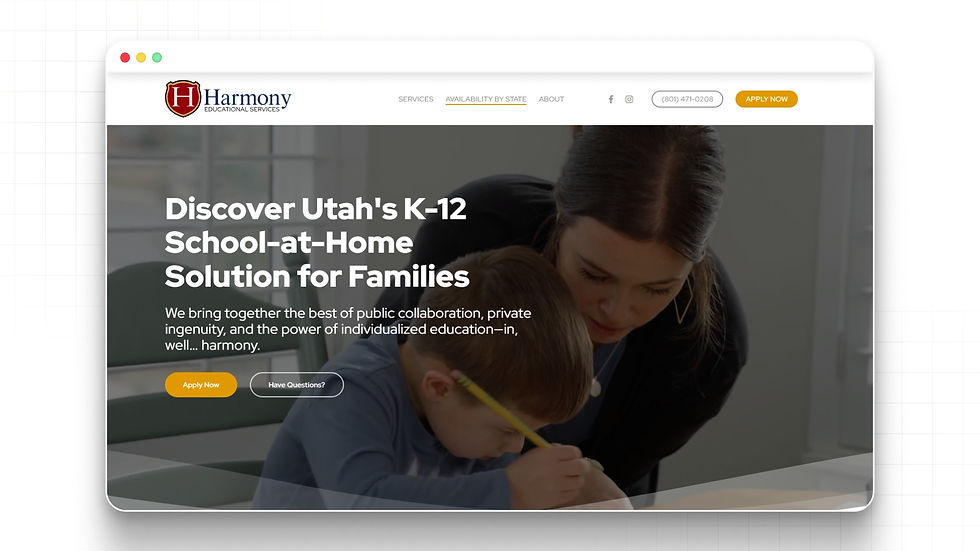
My Tech High operates through Harmony Education as a public school partnership. Your child enrolls in a partner public school rather than under your own homeschool notice of intent.
Families with multiple children have found My Tech High particularly useful because each child in the household can receive individual funding allocations.
The program is self-directed by design. You decide what your child studies, source the materials or classes, and submit receipts for reimbursement. This works well for experienced homeschoolers who already know what they want. It requires more initiative from parents than a pre-packaged program.
Best for: Experienced homeschool families comfortable choosing their own curriculum and managing reimbursements.
Grade range: K-12
Approach: Self-directed with funding support
Cost: Funded program, check current funding amounts at mytechhigh.com
4. Link Education League (Davis County, Utah)

Link Education League is a hybrid homeschool program in Davis County designed for elementary and middle school students. Students attend 1 to 3 days per week for project-based learning sessions, exploring immersive topics in culture, geography, science, and history. The remaining days are spent learning at home.
Each term focuses on a single deep-dive topic. Students work toward a 'celebration' at the end of the term, a real-world project that gives their learning a concrete purpose and audience. This model addresses one of the most common challenges in homeschooling, keeping kids socially connected and academically engaged without requiring a full school-week commitment.
Best for: Families in Davis County who want in-person learning days combined with home-based flexibility.
Grade range: Elementary and middle school
Approach: Project-based, hybrid, term-based immersive topics
Cost: Check linkeducationleague.com for current pricing
5. iCreate Collaborative (Orem, Utah)
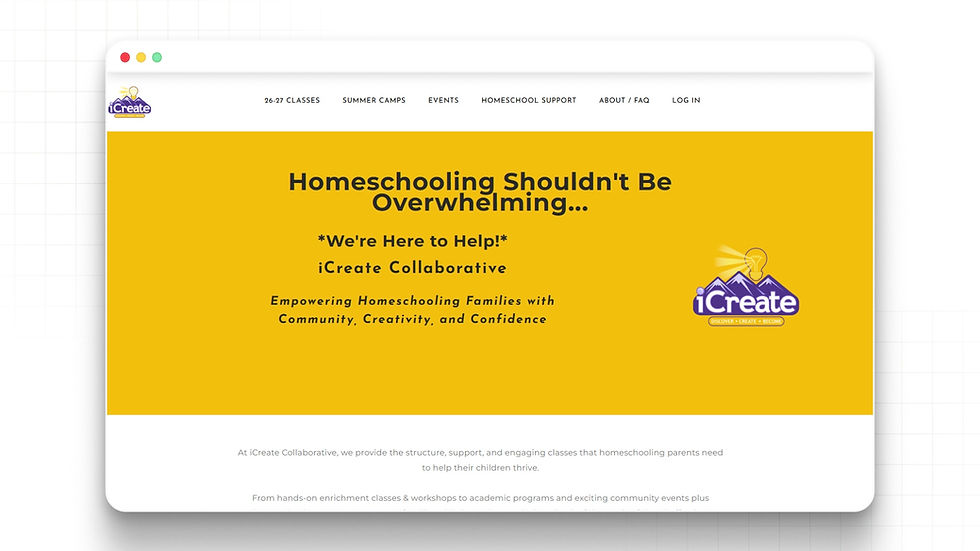
iCreate Collaborative in Orem offers a hybrid homeschool program with a strong focus on technology and entrepreneurship. Parents can enroll their children in individual classes or full-day programs, and the school collaborates with other homeschool groups and micro-schools in the area.
What sets iCreate apart is its emphasis on building entrepreneurial thinking alongside core academics. It is a good fit for families whose children are curious about how things work, enjoy making or building, and need a structured in-person environment a few days a week rather than every day.
Best for: Hands-on, creative learners in the Utah County area whose families value entrepreneurship and community.
Grade range: Elementary.
Approach: Technology, entrepreneurship, hybrid.
Cost: Check icreatelearning.com for current class and full-day pricing.
6. Classical Conversations (Statewide, Local Communities)

Classical Conversations operates through parent-led communities across Utah. Families meet once a week for a community day, during which students review memory work, present, and engage in structured conversations. The rest of the week is spent reinforcing that content at home.
The program follows a classical model built around three stages: grammar (memorization of foundational facts), dialectic (analysis and reasoning), and rhetoric (communication and application). It is explicitly faith-based, making it a strong fit for families seeking a values-aligned community alongside a rigorous academic structure.
Best for: Faith-based families who want a structured classical education with weekly community days.
Grade range: Pre-K through high school.
Approach: Classical, memory-based, community-day model.
Cost: Varies by community; check classicalconversations.com for Utah locations.
Tips for Matching the Right Program to Your Situation
The programs above solve different problems. Run your choice through these four filters before committing.
1. If You Are New to Homeschooling
Most first-year homeschool parents make the same mistake: they spend August building their own curriculum, only to hit a wall by October.
Start with a program that hands you a ready-made sequence. You need to focus on learning how to teach, not on building what to teach.
Two strong starting points for Utah families:
OpenEd if budget is your first concern. Utah funds it fully for eligible families.
TSHA's 6-Week Sessions, if screen-free, hands-on learning is the reason you left traditional school. You get a clear structure without committing to a full year upfront.
2. If You Are Teaching Multiple Children at Different Grade Levels
The real problem is not finding a program for each child. It is avoiding three separate lesson plans, three schedules, and three material sets running at the same time.
Before choosing, ask:
Does the program span a wide enough grade range to cover more than one child?
Does it offer per-child funding so you are not doubling costs for each additional child?
My Tech High's per-child funding model is worth considering seriously, especially for families with three or more children.
3. If You Travel Frequently or Move Between States
This filter immediately cuts the list in half.
Link Education League and iCreate require physical attendance in specific Utah counties.
OpenEd and My Tech High are funded by Utah. Eligibility ends when you leave the state.
The honest test: can this program run from a rental in a different state, a relative's house, and a hotel room all in the same school year? If not, it is not portable. It is just marketed as flexible.
4. If Your Child Needs Peer Interaction Built Into the Week
Some children stay engaged all week because of one good in-person day. Others do fine without it. Know which child you have before picking a program.
If your child needs regular peer contact, build the program choice around that requirement, not around it as an afterthought.
Programs with in-person days as a core part of their model, not an add-on:
Link Education League (Davis County, 1 to 3 days per week)
iCreate Collaborative (Orem, individual classes or full-day options)
Classical Conversations (weekly community day, statewide)
If you want a home-based program, look specifically for one that includes live group sessions and an active parent network built into the cost.
How to Avoid Common Homeschool Mistakes in Utah?

Once you have picked a program, a few practical steps can make your homeschool year run more smoothly from day one.
File Your Affidavit Early
Do this before the school year begins. Your local school district processes the affidavit, and you will receive your excuse certificate within 30 days. Filing early means no gaps if you are transitioning a child out of public school.
Apply for Funding Before You Buy Curriculum
If you qualify for the Utah Fits All scholarship or are enrolling through a public school partnership like OpenEd or My Tech High, wait until you know your funding situation before purchasing curriculum materials. The scholarship covers approved expenses, including curriculum, materials, and extracurricular activities.
Keep a Portfolio Even Though It Is Not Required
Utah does not require record-keeping for homeschoolers, but a portfolio of your child's work is useful for two reasons. First, it gives you a clear picture of what your child has learned and where gaps might exist. Second, if your child ever transitions back into a traditional school or applies to college, that portfolio becomes evidence of their education.
Connect with Utah's Homeschool Community
The Utah Home Education Association (UHEA) is one of two statewide homeschool associations in Utah, along with the Utah Christian Homeschool Association. These organizations offer resources, guidance, and connections to local co-ops and support groups. Even if you prefer to homeschool independently, knowing your local community exists can be valuable when questions come up.
Final Thoughts!
Utah's homeschool community is not small or experimental. According to U.S. Census Household Pulse data, about 6.21% of Utah K-12 students were homeschooled in 2022-23, rising to around 6.5% in 2024. The co-ops, the funding programs, and the support networks exist because enough families have made this choice before you and built something worth joining.
Each program on this list solves a different problem. The right one is the one that matches how your child learns and how much time you can realistically give on a Tuesday afternoon, not the one with the biggest marketing budget.
If you want a complete, hands-on program for Pre-K through 6th grade that does not depend on screens, The School House Anywhere (TSHA) builds its entire program around that goal.
Start with a 6-Week Session at tshanywhere.org. Register as a parent or educator today.
FAQs
1. How much money do you get per child for homeschooling in Utah?
Homeschooled students in Utah can receive about 4000 to 6000 dollars per child through programs like Utah Fits All, depending on eligibility and funding cycle.
2. Are there homeschool communities or groups in Utah for support?
Yes, Utah has active homeschool communities, co-ops, and statewide associations where families connect, share resources, organize activities, and support each other throughout the school year.
3. Can you combine different homeschool resources in Utah?
Yes, many families combine multiple curriculum providers, online tools, and local programs to create a customized learning setup instead of relying on a single structured program.
4. Do homeschool students in Utah need to take standardized tests?
Utah does not require standardized testing for homeschool students, allowing parents to assess progress through portfolios, projects, or alternative evaluation methods.
5. Can homeschool students in Utah receive a valid diploma?
Parents can issue a homeschool diploma in Utah, and students can also pursue a GED if they need standardized documentation for college admissions or professional licensing.


Comments