Homeschooling Statistics by State in the U.S.

The COVID‑19 pandemic, school closures, and a growing desire for flexible learning have led more families to consider homeschooling. In 2024, the U.S. National Center for Education Statistics (NCES) reported that about 5.2% of children aged 5‑17 received instruction at home. This marked a significant increase from the 3% of students who were homeschooled in 2019.
With such rapid growth, parents, micro‑school educators, and education‑sector entrepreneurs want to know where homeschooling is most prevalent and why. This blog examines state‑level homeschooling percentages, explains factors driving variation, and offers insights for those planning a home‑education journey.
Key Takeaways
U.S. homeschooling has surged, with about 5.2% of children homeschooled in 2022-2023, up from 3% in 2019.
The COVID-19 pandemic significantly boosted homeschooling rates, with many families continuing to homeschool post-pandemic due to increased satisfaction with flexible learning options.
Homeschooling rates vary significantly by state, with Alaska, Tennessee, and Montana having the highest percentages, while urbanized states like Massachusetts and New York report lower numbers.
Parents cite reasons like safety concerns, dissatisfaction with academic instruction, moral or religious education, and special needs as key drivers for homeschooling.
What Counts as Homeschooling?
The NCES defines a homeschooled student as a child aged 5‑17 who receives instruction primarily at home instead of at public or private schools. Students who take some courses at public or private schools but receive most instruction at home can still be counted as homeschooled, but children enrolled in school for more than 25 hours per week are excluded.
Reasons families choose this path include concerns about school environments, dissatisfaction with academic instruction, a desire to provide religious instruction, or special needs for flexibility.
Why Do Parents Choose to Homeschool?

Parents choose to homeschool their children for a variety of reasons, often citing multiple factors that align with their educational values and priorities. According to a report, the most common reasons are:
Concern about the school environment: 83% of parents cite safety concerns, such as drugs or negative peer pressure, as reasons for homeschooling. This reflects a desire for a safer, more supportive learning environment for their children.
Dissatisfaction with academic instruction: 72% of parents are dissatisfied with academic standards, teaching quality, or the school's curriculum. This dissatisfaction can stem from a perceived mismatch between the child’s learning needs and what schools offer.
Desire to provide moral instruction: 75% of parents choose homeschooling to impart moral or ethical values to their children.
Emphasis on family life: 72% of parents prefer homeschooling to spend more time with their children and strengthen family bonds.
Religious instruction: 53% of parents homeschool to integrate religious teachings into their child’s education, aligning with their family’s values and beliefs.
Nontraditional education approach: 50% of parents choose homeschooling to offer a more personalized or alternative learning experience for their children.
Special needs or health issues: 15% of parents homeschool because their child has a physical or mental health condition that has lasted six months or more. 2% of parents homeschool because their child has a temporary illness that prevents them from attending traditional school. 21% of parents homeschool because their child has special needs that they feel the traditional school cannot address.
These reasons reflect the varied motivations parents have for choosing homeschooling, which is often based on the specific educational, social, or emotional needs of their children.
With The School House Anywhere (TSHA), you can efficiently apply child-centric learning while homeschooling and microschooling your children. Our program is grounded in the American Emergent Curriculum (AEC), emphasizing an interconnected and developmentally aligned educational structure.
Homeschooling Percentage by State
Publicly available state‑level homeschooling data remains limited. Some states do not require families to register at all.
To produce a consistent benchmark, we combined the dataset of state‑reported homeschool counts with NCES public school enrollment figures. We have also used JHU’s estimates, which rely on the U.S. Census Household Pulse Survey.
The table below summarizes the percentage of K‑12 students reported as homeschooled during the 2022‑23 and 2023‑24 school years for all 50 states and the District of Columbia (where data are available).
Note: These figures reflect survey estimates rather than official enrollment counts and should be viewed as indicative rather than definitive. Nevertheless, they offer the most comprehensive snapshot of state‑level homeschooling participation available today.
State | 2022–23 | 2023–24 |
Alabama | 6.81% | 7.99% |
Alaska | 12.56% | 16.15% |
Arizona | 5.68% | 5.26% |
Arkansas | 6.89% | 8.16% |
California | 4.89% | 4.42% |
Colorado | 5.74% | 7.00% |
Delaware | 4.85% | 4.75% |
Florida | 6.82% | 6.41% |
Georgia | 6.99% | 6.27% |
Illinois | 4.85% | 4.53% |
Indiana | 6.88% | 7.58% |
Iowa | 4.74% | 5.15% |
Kansas | 5.77% | 5.37% |
Kentucky | 5.96% | 7.29% |
Louisiana | 6.71% | 6.79% |
Maine | 5.15% | 5.86% |
Maryland | 5.99% | 4.65% |
Massachusetts | 3.14% | 3.39% |
Michigan | 5.04% | 6.58% |
Minnesota | 4.29% | 4.93% |
Mississippi | 7.72% | 7.77% |
Missouri | 7.98% | 7.06% |
Montana | 8.02% | 9.03% |
Nebraska | 4.02% | 4.26% |
Nevada | 5.93% | 6.02% |
New Hampshire | 6.21% | 6.34% |
New Jersey | 3.62% | 3.69% |
New Mexico | 7.05% | 6.74% |
New York | 3.23% | 3.66% |
North Carolina | 7.72% | 6.75% |
North Dakota | 5.02% | 5.78% |
Ohio | 5.25% | 5.68% |
Oklahoma | 6.70% | 7.91% |
Oregon | 6.53% | 7.03% |
Pennsylvania | 5.57% | 6.73% |
Rhode Island | 2.86% | 5.32% |
South Carolina | 6.74% | 8.00% |
South Dakota | 6.11% | 5.97% |
Tennessee | 9.02% | 10.75% |
Texas | 5.95% | 6.28% |
Utah | 6.21% | 5.76% |
Vermont | 5.35% | 6.66% |
Virginia | 6.83% | 7.33% |
Washington | 6.59% | 6.04% |
West Virginia | 8.89% | 8.23% |
Wisconsin | 5.12% | 4.87% |
Wyoming | 7.74% | 7.30% |
Patterns and Key Takeaways
Several patterns emerge from the 2023‑24 data.
Alaska retains the highest homeschool share, with about 16.15% of K‑12 students learning at home.
Tennessee (10.75%) and Montana (9.03%) follow, while West Virginia (8.23%) and Arkansas (8.16%) round out the top five.
At the other end of the spectrum, large states with dense urban centers report lower participation: Massachusetts (3.39 %), New York (3.66 %), and New Jersey (3.69 %) have the smallest shares.
California also remains below 5% despite its sizable homeschool community.
Comparing year‑over‑year changes reveals significant shifts. Alaska, Rhode Island, and Tennessee saw the largest increases between 2022‑23 and 2023‑24, with Alaska’s share rising 3.6 percentage points and Rhode Island jumping 2.5 points.
Washington D.C., Hawaii, and Maryland experienced the largest declines. Overall, most states saw stable or modestly rising participation, suggesting that homeschooling’s pandemic‑driven surge may be stabilizing at a new, higher baseline.
Factors Influencing Homeschooling Rates
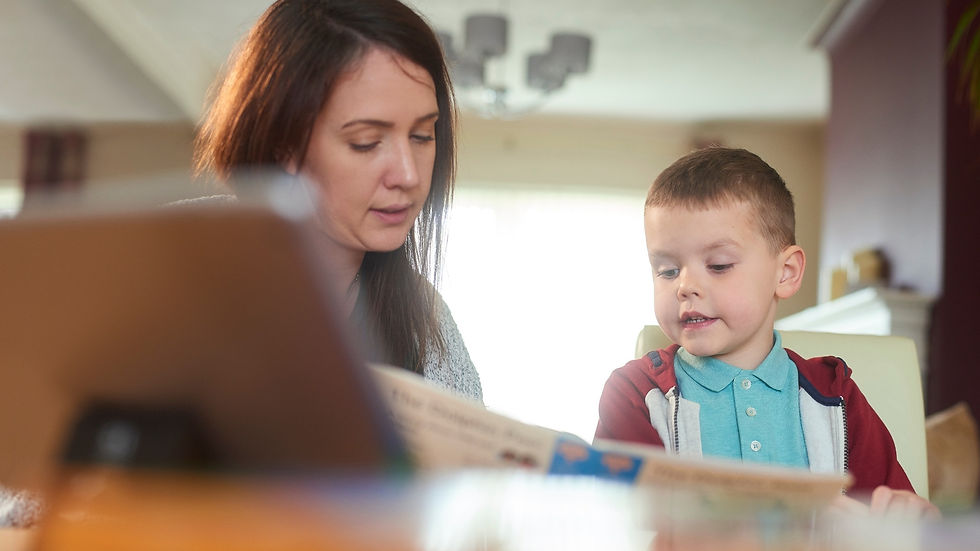
Several factors, like policy changes, societal shifts, and the growing desire for customized learning, are shaping the decision to homeschool, particularly in the context of increasing demand for flexible and personalized education options.
1. State Regulations and Reporting Requirements
Homeschool laws vary widely. Some states, such as Alaska and Texas, have relatively light regulation and do not require parents to submit instructional plans or standardized test scores.
Others, like New York and Massachusetts, have rigorous reporting requirements, mandatory curricula, and annual assessments. Families in states with onerous regulations may instead choose private schools or micro‑schools.
2. Cultural Attitudes and Community Support
Homeschooling tends to be more common in rural areas and regions with strong religious or libertarian traditions. Community networks, co‑ops, and resource centers can significantly reduce the burden on parents, enabling more families to teach at home. In states like Kentucky and Mississippi, local homeschool associations offer shared curricula and extracurricular activities, boosting participation.
3. Pandemic Effects and Health Concerns
Health concerns remain a key driver. The NCES found that many parents homeschool because they are concerned about the school environment, including safety, drugs, or negative peer influences. The pandemic added worries about infection and remote learning quality. Even as schools reopened, many families continued homeschooling due to increased satisfaction with flexible schedules and the ability to address individual learning needs.
4. Economic and Demographic Factors
Household income, parental education, and the availability of at‑home caregivers also influence homeschool choices. States with higher concentrations of stay‑at‑home parents or remote workers may find it easier to manage homeschooling. Conversely, single‑parent households and families with parents working long hours may find homeschooling impractical without external support.
Year‑Over‑Year Changes and Emerging Trends
Analyzing recent data, this section identifies year-over-year changes in homeschooling rates and emerging patterns, including shifts in regional preferences and educational methodologies.
1. Rapid Expansion During the Pandemic
The pandemic spurred unprecedented growth in homeschooling. Parents increasingly cited health and safety concerns and flexibility to tailor curriculum as reasons for educating at home.
A 2024 analysis by Education Next using U.S. Census Bureau’s Household Pulse Survey (HPS) estimated that almost 6 percent of school‑aged children were homeschooled in 2023, with Alaska (12.6%), Tennessee (9%) and West Virginia (8.9%) showing the highest shares and Rhode Island (2.9%) and Massachusetts (3.1%) among the lowest.
2. Growing Participation Beyond Early‑pandemic Highs
After initial pandemic surges, some observers expected homeschool rates to decline as schools reopened. However, data show continued growth. States such as Louisiana, South Carolina, and South Dakota reported double‑digit percentage gains in homeschool registrations. These increases suggest that families are adopting homeschooling as a long‑term educational strategy rather than a temporary measure.
3. Policy Changes and Administrative Hurdles
Policies can influence participation. In New Hampshire, administrative changes reclassified many homeschooled students as “non‑enrollees,” causing apparent declines. Policy revisions, such as streamlined registration or access to extracurricular activities, can make homeschooling more accessible and may encourage more families to participate.
4. Micro‑schools and Hybrid Models
Micro‑schools and hybrid co‑ops are blending homeschooling and group learning. Families enrol children in small groups for shared classes (e.g., science labs or foreign languages) while maintaining primary instruction at home. These models can provide socialization opportunities and lighten the teaching burden on parents.
Entrepreneurs in the education sector may find opportunities here, especially when aligned with frameworks like AEC (adaptive, experiential, collaborative) learning.
Considerations for Parents and Educators

Understand your state’s laws: Check your state’s requirements for notification, curriculum, and assessments. States with strict regulations may require more paperwork or standardized tests, while others rely on parental discretion.
Plan curriculum and resources: A comprehensive curriculum that covers core subjects and complies with state guidelines is essential. Look for resources that support personalized learning, such as digital platforms and adaptive curricula.
Create a support network: Join local co‑ops or online communities to share resources, organize field trips, and provide social interaction for students. Micro‑schools and resource centers can offer specialized instruction and reduce isolation.
Monitor progress and adjust: Regularly assess your child’s progress through formal tests or portfolio reviews. Flexibility is a key advantage of homeschooling; if a method isn’t working, you can adapt without waiting for a school term to end.
Stay informed about trends: Homeschooling regulations and resources evolve. Keep up with state policy changes and new educational tools. For families who travel frequently or relocate, understanding differences across states will help maintain compliance.
TSHA: A Resource for Homeschooling Families and Educators
For parents and educators exploring the various options in homeschooling, The School House Anywhere (TSHA) provides a comprehensive suite of tools and resources to support a flexible, hands-on learning experience.

TSHA’s American Emergent Curriculum (AEC) is a developmentally-aligned curriculum designed for Pre-K to 6th-grade students, offering a unique approach to homeschooling that prioritizes real-world learning and critical thinking.
TSHA offers several key features that cater to a wide range of homeschooling needs, including:
Curriculum Program: AEC curriculum covering various subjects to support intellectual, emotional, and social development.
Educational Resources: Access to an extensive library of films, samples, and printables to enhance the learning experience.
User-Friendly Interface: Simplifies lesson management and progress tracking for parents and educators of all experience levels.
24/7 Live Support: Continuous access to expert guidance for curriculum-related queries and troubleshooting.
Secular Education: Inclusive, non-religious content that fosters critical thinking and real-world application.
Transparent Classroom: A progress tracking tool that helps parents and educators maintain accurate records and meet regulatory requirements.
For micro-schools and education entrepreneurs, TSHA also provides administrative tools, community support, and resources for starting and managing education programs.
Whether you are homeschooling in a traditional setting, running a micro-school, or considering education entrepreneurship, TSHA’s curriculum and support services offer an all-in-one solution to streamline the homeschooling experience.
Conclusion
Homeschooling has become a mainstream alternative for millions of U.S. families. National data show that more than 5% of children are now homeschooled, and the 2023‑24 survey estimates reveal that some states, like Alaska, have homeschooling rates exceeding 16%.
Variation across states reflects differing laws, community cultures, demographics, and pandemic responses. For parents, educators, and entrepreneurs considering home‑based education, understanding these patterns can inform strategic decisions and contribute to more responsive, student‑centered learning.
Ready to Simplify Your Homeschooling Journey?
The School House Anywhere’s pedagogical approach combines the best of both worlds: modern, effective learning methods and cherished elements of traditional schooling. With the American Emergent Curriculum (AEC), TSHA integrates a Structured Work Cycle, Project-Based Learning, Critical Thinking, Group Dialogue, and a vibrant Art, Nature + Design Studio.
We also offer a vast library of educational films, printable materials, and 24/7 live support. So register with us as a parent or an educator today and start your journey towards a personalized learning experience!
FAQs
1. What percentage of students are homeschooled in the U.S. in 2025?
According to the National Center for Education Statistics, about 5.2% of children aged 5‑17 were homeschooled during the 2022‑23 school year. Overall, homeschooling represents a small but growing share of U.S. education.
2. Which state has the highest homeschool rate?
Alaska has the highest homeschool share, at about 16.15%, followed by Tennessee (10.75%) and Montana (9.03%).
3. How do state regulations affect homeschooling?
Regulations vary widely. States like Texas and Alaska have minimal oversight, making it easier to homeschool. Others, such as New York and Massachusetts, require families to submit curriculum plans and periodic assessments, which can deter some parents or encourage them to join private “umbrella” schools.
4. Will homeschooling continue to grow?
Early data indicate that homeschooling continues to expand, with most reporting states showing increases between 2022‑23 and 2023‑24. Factors such as flexible work arrangements, dissatisfaction with traditional schooling, and innovative micro‑school models suggest that home education will remain a significant part of the educational landscape.


Comments